
Commercial vs. Oil & Gas Drilling: Why the Distinction Matters
July 3, 2026 · 6 min read · By Thomas Charles
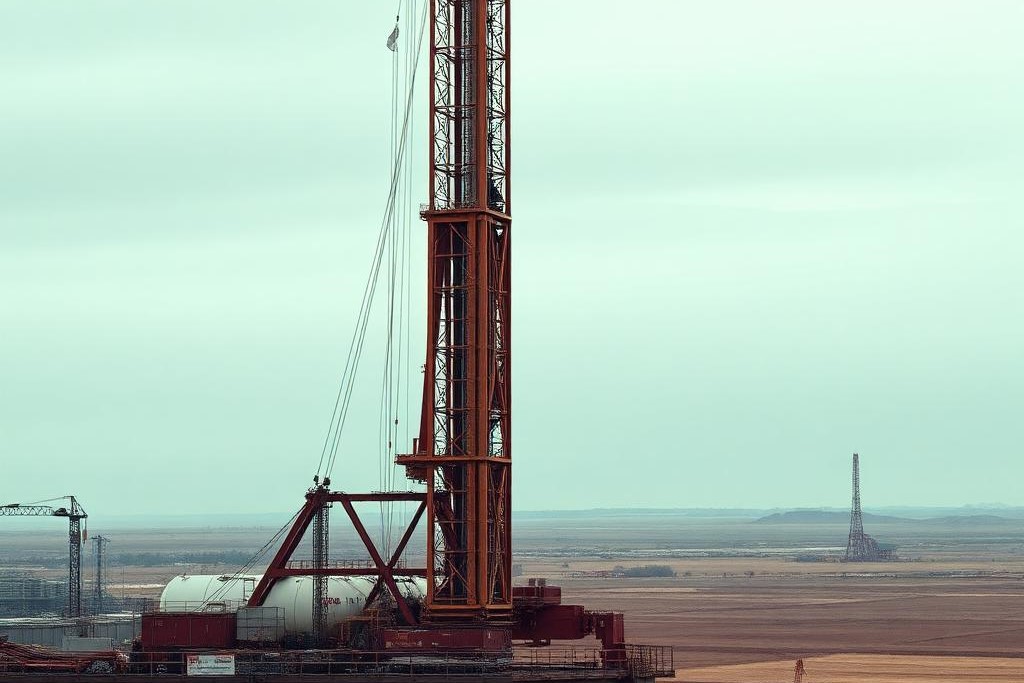
When you hear the word “drilling,” what comes to mind? For most people, it’s an image of a towering derrick in a dusty West Texas field, roughnecks wrestling with pipe, and the promise of crude oil or natural gas surging from deep within the earth. That picture, shaped by a century of headlines and Hollywood, is powerful. It’s also completely wrong for understanding the world we operate in. We’re in the drilling business, yes, but not that drilling business. We inhabit the commercial construction side of the industry, a niche that’s fundamentally different from oil and gas. It’s a world of deep foundations, heavy civil infrastructure, and complex vertical construction. Confusing the two isn’t just a simple mix-up; it leads to profoundly flawed conclusions about the work itself, the equipment it takes, the people who do it, and the economics that drive it all. This isn’t about semantics. It’s about getting the entire framework right from the start.
Different Customers, Different Worlds
Our phones ring because a general contractor won a bid to build a new semiconductor fabrication plant, a high-rise, or a million-square-foot data center. Or we’re called in by a major utility to begin a multi-year grid hardening project, replacing transmission towers built in the 1960s. The customers are the giants of the construction and engineering world—the Bechtels, the Kiewits, the Turners—and the public utilities tasked with keeping the lights on. Their decisions aren’t driven by the daily fluctuations of WTI crude or the latest OPEC meeting. They’re driven by construction backlogs, capital expenditure budgets set years in advance, and secular trends in infrastructure spending.
The demand cycle in construction is long. A new data center campus, for example, isn’t conceived and built in a single quarter. It’s the result of years of planning, permitting, and design, fueled by the relentless growth of cloud computing and AI. The same goes for the U.S. power grid rebuild, a multi-decade effort to modernize an aging system. These are not speculative ventures; they are essential, planned-out projects. The funding is tied to corporate balance sheets, utility rate cases, and federal appropriations like the Infrastructure Investment and Jobs Act. It’s a world of Gantt charts and critical path scheduling, not wildcatting.
Contrast that with oil and gas. There, the primary customer is the energy producer, from supermajors to smaller independents. Their drilling activity is a direct function of commodity prices and their sentiment about future prices. When oil is high, the directive is to drill, and rig counts climb. When prices collapse, drilling programs are slashed, rigs are stacked, and the whole ecosystem goes into a sharp downturn. It’s a boom-and-bust cycle tied to global supply and demand, geopolitical events, and financial markets. The drivers are immediate, reactive, and far more volatile than the slow, steady pulse of commercial construction.
A Different Breed of Iron
You cannot take a rig designed for the Permian Basin and use it to drill foundation shafts for a bridge. The iron is fundamentally different, engineered for entirely different tasks. Our workhorse is a machine like the CZM LR160, a hydraulic rotary rig. It’s designed to bore large-diameter holes—anywhere from 24 inches to 12 feet across—relatively shallowly into the earth, typically 50 to 150 feet deep. Its job is to excavate soil and rock to make way for a steel-reinforced concrete column, known as a drilled shaft or caisson.
This machine is a marvel of focused engineering. It’s mounted on a carrier that provides stability and mobility on a constrained construction site. The rotary head delivers immense torque to spin drilling tools like augers and core barrels, designed specifically to handle the complex geology of a building site—a mix of clays, sands, gravels, and solid bedrock. Precision is key. We’re not just punching a hole; we’re engineering a foundation element to within tight tolerances, ensuring it’s perfectly plumb and positioned to carry the immense load of the structure that will sit on top of it. One drilled shaft for a major transmission line tower has to withstand not just the tower’s weight but also immense wind and torsion loads for the next 50 years.
Our support fleet is just as specialized. A Cat 308 excavator is a surgeon, not a brute, used for clearing the bore hole, managing spoils, and placing starter casings. A Cat 299D3 XE track loader, with its endless array of attachments, is the Swiss Army knife of the site, moving tooling, materials, and keeping the operation flowing. JLG 2733 telehandlers lift and place heavy rebar cages into the shafts before the concrete pour. And moving all this between jobs requires a heavy-haul fleet of Western Star 49X tractors and specialized lowboy trailers. Every piece of equipment is chosen for its specific role in the tightly choreographed dance of foundation drilling.
The Rigs Don't Turn Themselves
Just as the iron is specialized, so are the crews. An oilfield driller is an expert in managing pressures, mud systems, and downhole tools for wells that can be miles deep. A commercial foundation driller is an expert in soil mechanics, rock identification, and concrete. They have to be able to read a geotechnical report and understand what it means for their drilling strategy. They have to know the difference between drilling in sandy loam versus hard blue shale and adjust their tooling and technique on the fly.
Our superintendents and operators are the critical link between the engineering plans and the physical reality in the ground. They work in a complex, congested environment, coordinating with concrete trucks, rebar installers, dirt haulers, and the general contractor’s site managers. A typical day involves interpreting the "geo" report, selecting the right auger or core barrel, managing the removal of spoils, and overseeing the placement of a rebar cage that might weigh tens of thousands of pounds. There’s no fracking, no blow-out preventers, and no discussion of barrels of oil equivalent.
The business itself is one of precision manufacturing on a massive, dirty scale. We are, in essence, manufacturing a custom structural component right there on site, deep in the ground. The success of the entire multi-hundred-million-dollar project above depends on us getting that foundation element exactly right. This requires a level of collaboration and on-site problem-solving that is unique to the construction environment. It’s a culture of tape measures, levels, and laser plummets.
The Dirt on the Business Model
The business model in commercial drilling is tied directly to the rhythms of the construction industry. We work as a specialty subcontractor. A general contractor (GC) sends out a bid package that includes the geotechnical report and the foundation plans prepared by a structural engineer. We analyze the plans and the geo report, assess the risks—how much rock will we hit? Is the ground unstable? Are there underground utilities?—and submit a bid. Our pricing is typically based on a per-foot basis for drilling and a lump sum or per-unit price for things like rebar cages and concrete placement.
Once we win the job, we mobilize our rig and crew to the site. Our revenue comes from executing the work specified in the contract. A project might call for 50 shafts, each 80 feet deep and 48 inches in diameter. Our job is to drill those holes, help set the rebar, and manage the concrete pour for each shaft. We get paid as we complete this work, billing the GC on a monthly basis. Our profitability depends on our efficiency—how many feet can we drill in a day?—and our accuracy in bidding the job.
DrillingCrust’s role in this ecosystem is to provide the capital that makes this all possible. A new, fully equipped CZM rig package represents a significant capital outlay. We fund these assets and lease them to the operating companies who put them to work. This model allows the operators to focus on what they do best: bidding jobs and executing the work in the field. It’s a financial structure built for the long, steady demands of infrastructure, not the sharp, speculative cycles of commodities.
Volatility, Backlog, and Long-Term Cycles
The risk profile of this business is fundamentally misunderstood when viewed through an oil and gas lens. The volatility is entirely different. While an oil price crash can cause drilling activity to halt almost overnight, the commercial construction world moves much more slowly. Our work is tied to the GC’s backlog, which can stretch out for years.
If a recession hits, a data center that is already under construction doesn't just stop. The foundation is already in, the steel is already ordered. The project continues. The long lead times and massive capital already committed create immense inertia. This backlog provides a shock absorber that the commodity world lacks. We may see a slowdown in new bids for a time, but the work already under contract keeps the rigs turning. This creates a more stable and predictable demand profile.
Furthermore, the current drivers for our niche are powerful, multi-decade secular trends. The push to reshore critical manufacturing like semiconductor fabs, the explosion in electricity demand from AI and data centers, and the build-out of EV production facilities are not short-term phenomena. These are national priorities backed by both private and public capital. The U.S. power grid, much of it built 50 to 70 years ago, is in critical need of an upgrade to handle these new loads and improve reliability. That means new transmission lines, new substations, and new power plants—all of which sit on drilled shaft foundations.
Getting the Category Right
At the end of the day, drilling is just a process for making a hole in the ground. But the "why" behind the hole changes everything. In oil and gas, the hole is the point; it’s a conduit to extract a resource. The value is in what comes out of it. In our world, the hole is simply the first step in a construction process. The value is in what we put into it: steel and concrete. We are not in the extraction business; we are in the vertical construction and infrastructure business. We just happen to start our work underground.
This distinction is not trivial. It informs everything from equipment strategy and crew training to financial modeling and risk assessment. Trying to understand a foundation drilling company by looking at rig counts from Baker Hughes or EIA oil inventory reports is like trying to navigate a city with a nautical chart. The markers are all wrong. The landscape is completely different.
DrillingCrust and its operating companies are purely focused on this construction niche. We work with civil engineers, not petroleum geologists. We track construction backlogs, not crude futures. Our success is tied to the long-term health of American infrastructure, the growth of high-tech manufacturing, and the modernization of our power grid. It’s a business built on a foundation, quite literally, of concrete and steel—and it’s a world away from oil and gas.
When people first hear the word "drilling," the mental model that gets triggered is almost always oil and gas. That is understandable — oil and gas is the largest and most public part of the extractive drilling world. But the commercial drilling niche that DrillingCrust operates in is a completely different business. Confusing the two leads to the wrong conclusions about how it works.
Different customers
Oil and gas drilling serves energy producers. Its cycles are tied to commodity prices, drilling permits, and rig-count trends. Commercial drilling serves construction general contractors, utilities, and heavy civil engineers. Its cycles are tied to construction backlogs, utility capex, and infrastructure spending — a very different set of drivers.
Different iron
The rigs are not interchangeable. Rotary drilled shaft machines like the CZM LR160 are engineered for construction foundations, not oil wells. Their crews, tooling, and support fleets follow the same specialization.
Different risk profile
Because commercial drilling is downstream of infrastructure and utility spending, its demand tends to move with construction backlogs and long-cycle utility planning. That produces a very different volatility profile from oil-price-driven activity.
Why the distinction matters
Understanding what you are actually looking at starts with getting the category right. DrillingCrust operates in the construction niche of drilling. It has nothing to do with oil and gas, and its work should be evaluated against infrastructure and specialty construction benchmarks — not energy benchmarks.
Working in commercial drilling?
Reach out to a DrillingCrust representative to talk projects, partnerships, or the fleet.

A holding company operating across the U.S. commercial drilling industry. We invest capital, provide funding, and lease equipment to established operators building the foundations of modern American infrastructure.
Contact
© 2026 DrillingCrust Holdings LLC. All rights reserved.