
Building a Next-Generation Drilling Workforce
February 6, 2026 · 7 min read · By Thomas Charles
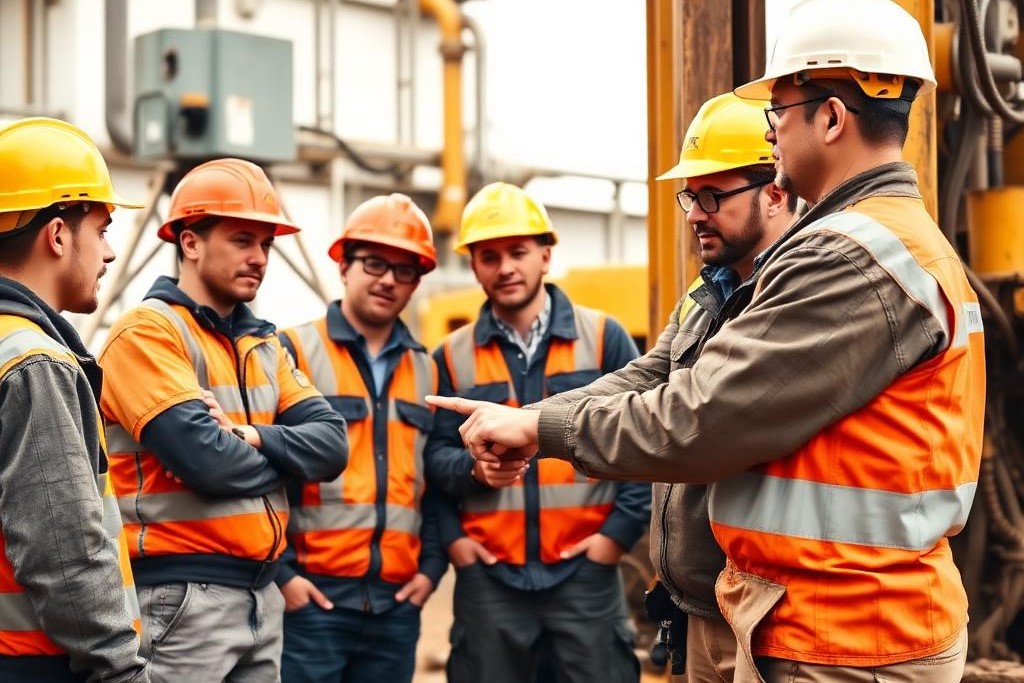
You can finance the iron, but you can’t finance the experience. That’s a lesson being learned the hard way across the commercial drilling industry right now. It’s one thing to get the capital for a new CZM LR160 rotary rig; it’s another thing entirely to find a crew that can run it to its full potential without putting a multi-million dollar asset at risk. We see it on job sites: brand new, high-spec equipment sitting idle for a shift, a day, or even a week. It isn’t a mechanical issue. It isn’t waiting on inspectors. The bottleneck is the one resource with a lead time measured in years, not quarters: a trained, cohesive, and productive drilling crew.
Talk to any operator, from a small outfit with a single rig to a major player in the foundation business, and the story is the same. The real constraint on growth isn’t access to capital or the availability of equipment. It’s people. The industry has focused so heavily on the specs of the rigs, the capabilities of the tooling, and the logistics of moving heavy iron that it has taken for granted the human element. Now, with a generational infrastructure buildout underway, the bill for that oversight is coming due. The companies that thrive in this environment will be the ones that treat workforce development with the same seriousness as fleet management.
The Anatomy of a Modern Drilling Crew
A productive drill site is a synchronized operation, a team of specialists who trust each other implicitly. At the center is the rig operator, the one with their hands on the controls, translating geological data and the feel of the machine into a perfectly executed drilled shaft. But they don’t work alone. The foreman leads the crew, interfacing with the general contractor, interpreting the geotechnical report, and making the final calls on tooling and technique. They carry the weight of the schedule and the safety of the entire team.
Supporting them is the ground crew. This includes the welder, a critical role often overlooked, responsible for maintaining and repairing the hardened tooling that takes a constant beating. It includes the support equipment operators running the Cat 308 excavators to manage spoils and the JLG 2733 telehandlers to move casing and rebar cages. A groundsman, often the entry-level position, assists with everything from hooking up tooling to spotting the rig. Each role is distinct, but they all function as one unit. A breakdown in any one of these functions brings the entire multi-million-dollar operation to a halt.
Finally, you have the logistics backbone. The driver of the Western Star 49X pulling a lowboy isn’t just a truck driver; they are a heavy-haul specialist who knows how to get an oversized, overweight rig into a tight job site safely and legally. The mechanic in the Ford F-450 service truck doesn’t just turn wrenches; they understand the complex hydraulics and electronics of modern drilling equipment. Without this full ecosystem of talent, the rig is just a static sculpture of steel.
More Than a Labor Shortage, It’s a Skills Deficit
Calling this situation a simple labor shortage misses the point. The issue isn’t a lack of bodies; it’s a deficit of a very specific, hard-won skillset. A qualified rotary rig operator is a blend of old-school mechanical intuition and new-school technical literacy. They need to understand how to read a geotechnical report, differentiating between unconsolidated sands and load-bearing bedrock. Then, they must translate that report into action, feeling how the rig reacts as the tooling cuts through the earth.
That "feel" is everything. It’s the ability to sense the change in vibration when the auger teeth hit a harder rock seam. It’s the skill to interpret the color and consistency of the spoils coming out of the hole to verify the subsurface conditions. It’s the auditory sense to know when the engine is straining, signaling a need to back off the pressure before the tooling gets bound up. This is a trade learned through thousands of hours of repetition, at the controls, under the guidance of a seasoned mentor. There is no app for this, no classroom simulator that can replicate the infinite variables of drilling in the real world.
This is why simply hiring an "equipment operator" is not a solution. An operator experienced in bulk earthmoving with an excavator has a completely different set of skills from a driller. The former is moving visible material in open space. The latter is working blind, hundreds of feet below ground, where a single mistake can lead to catastrophic failure, lost tooling, or a compromised foundation element. The muscle memory and technical judgment are fundamentally different.
The Seven-Figure Cost of a Green Crew
Underestimating the value of an experienced crew isn’t just a philosophical error; it’s a massive financial risk. A green crew, or even a single inexperienced operator, can turn a profitable job into a disaster in minutes. One of the most common and costly mistakes is getting the tooling stuck downhole. An inexperienced operator might apply too much down pressure in a swelling clay formation or fail to clean the hole properly, causing the auger to become mechanically locked.
The immediate result is downtime, and on a drilling project, downtime is horrendously expensive. The entire site—the support crew, the concrete delivery, the rebar crew—is on standby, burning cash. But it gets worse. Now begins the fishing operation. The crew may spend days trying to free the tool, a process that involves skill, specialized equipment, and a lot of luck. If they can’t retrieve it, the operator is faced with a terrible choice: abandon a tool that can be worth anywhere from $50,000 to over $250,000, and potentially abandon the hole itself. Redrilling a shaft costs time and money, and on a schedule with liquidated damages for delays, the total financial impact of one such event can easily climb into the seven-figure range.
Beyond acute failures, inexperienced crews bleed money in less obvious ways. They are slower, reducing the number of feet drilled per shift. They are harder on the equipment, causing premature wear on everything from the tungsten carbide cutting teeth to the rig’s hydraulic system. A top-tier crew doesn’t just avoid disaster; they maximize the revenue-generating potential of the asset every single hour they are on the job.
How Smart Operators Build a Talent Pipeline
The operators who are winning are the ones who have stopped seeing labor as a commodity to be hired and fired. They are building a formal, in-house talent pipeline. They treat workforce development as a core business function, just like fleet maintenance or project bidding. This starts by creating a clear and tangible career path. A new hire doesn’t just see a job as a groundsman; they see a structured apprenticeship.
This program begins away from the primary rig. A new team member might start on a Cat 299D3 track loader, learning the flow of the job site, how to manage spoils, and the importance of safety protocols. From there, they cross-train on a Cat 308 excavator, digging starter pits and assisting the rig. They spend time with the welder to understand how tooling is built and repaired. This deliberate cross-training builds a holistic understanding of the operation. It makes them a more valuable team member at every stage and prepares them for the complexities of the driller’s seat.
Only after mastering these support roles does the apprentice begin getting "seat time" on the rig itself, and always under the direct supervision of a senior operator or foreman. They start in easy conditions, drilling in soft, consistent soils. Over months and years, they progress to more complex geologies, learning how to handle rock sockets, install casing in unstable ground, and manage drilling slurries. It’s a slow, methodical process that builds muscle memory and judgment layer by layer. This investment in methodical training is what separates a sustainable business from one that’s constantly lurching from one crisis to the next.
The Role of the Foreman as a Force Multiplier
In this system, the foreman is the critical link. A good foreman is not just a supervisor; they are a teacher, a mentor, and a risk manager. They are responsible for identifying the team members with the aptitude and attitude to become future operators. During the training process, they are the ones providing real-time feedback, coaching the apprentice through challenging ground, and deciding when they are ready for more responsibility. Their judgment is what protects the company’s assets and the project’s integrity during the high-risk learning curve.
This is why foreman compensation and retention is so critical. A top-tier foreman who can successfully train one or two new operators over a few years has provided an immense return to the company. They have effectively cloned their expertise, doubling the firm’s capacity to run complex, high-margin jobs. Losing a foreman isn’t just losing a headcount; it’s losing a talent factory and a repository of decades of site-specific knowledge.
The Demand Is Not Going Away
The urgency of this situation is underscored by the sheer scale of the work on the horizon. The projects driving demand today are not short-term builds. The national effort to modernize the power grid involves new transmission lines and substations that all sit on deep foundations. The exponential growth of AI and cloud computing is fueling a data center building boom, with each campus requiring thousands of drilled shafts. The reshoring of semiconductor fabrication and EV battery manufacturing brings with it massive new industrial plants, all needing extensive foundation work.
This isn’t a cyclical peak; it’s a sustained, decadal demand driver for sophisticated commercial drilling services. The projects are complex, the tolerances are tight, and the schedules are aggressive. This is precisely the environment where the gap between a top-tier crew and an average crew becomes a chasm. The general contractors and project owners for these critical infrastructure projects aren’t just buying drilling services; they are buying certainty. They need to know the foundations will be done on time, to spec, without excuses.
The winning drilling operators over the next decade will not necessarily be the ones with the most rigs in their yard. They will be the ones with the most trained crews on their payroll. They will be the companies that understood years ago that the most valuable asset isn’t the steel in the ground, but the skilled hands on the controls and the experienced mind leading the crew. In this business, you drill with iron, but you build a lasting enterprise with people.
Talk to any drilling operator in the country and the same theme comes up: crews are the real bottleneck. Rigs can be bought. Tooling can be sourced. Experienced drill operators, foremen, and support crews take years to develop, and the industry is not building them fast enough.
Why the shortage is structural
Commercial drilling is a skilled trade. A qualified rotary rig operator combines mechanical instinct, geological literacy, and safety discipline. Those skills are learned on the rig, alongside experienced mentors, over multiple project cycles. There is no shortcut.
What good operators do differently
The operators pulling ahead are treating workforce development as a formal program: structured apprenticeships, cross-training between the drill crew and the support fleet, and clear career paths from ground crew to foreman. They are also paying competitively — because they know the alternative is losing production capacity, not just headcount.
Why it matters for the industry
The infrastructure buildout underway in the United States will run for years. The winners in commercial drilling will not just be the operators with the most iron. They will be the ones with the most trained crews to keep that iron productive.
Working in commercial drilling?
Reach out to a DrillingCrust representative to talk projects, partnerships, or the fleet.

A holding company operating across the U.S. commercial drilling industry. We invest capital, provide funding, and lease equipment to established operators building the foundations of modern American infrastructure.
Contact
© 2026 DrillingCrust Holdings LLC. All rights reserved.