
Casing Methods in Variable Soils: Keeping Holes Open Under Pressure
April 24, 2026 · 7 min read · By Thomas Charles
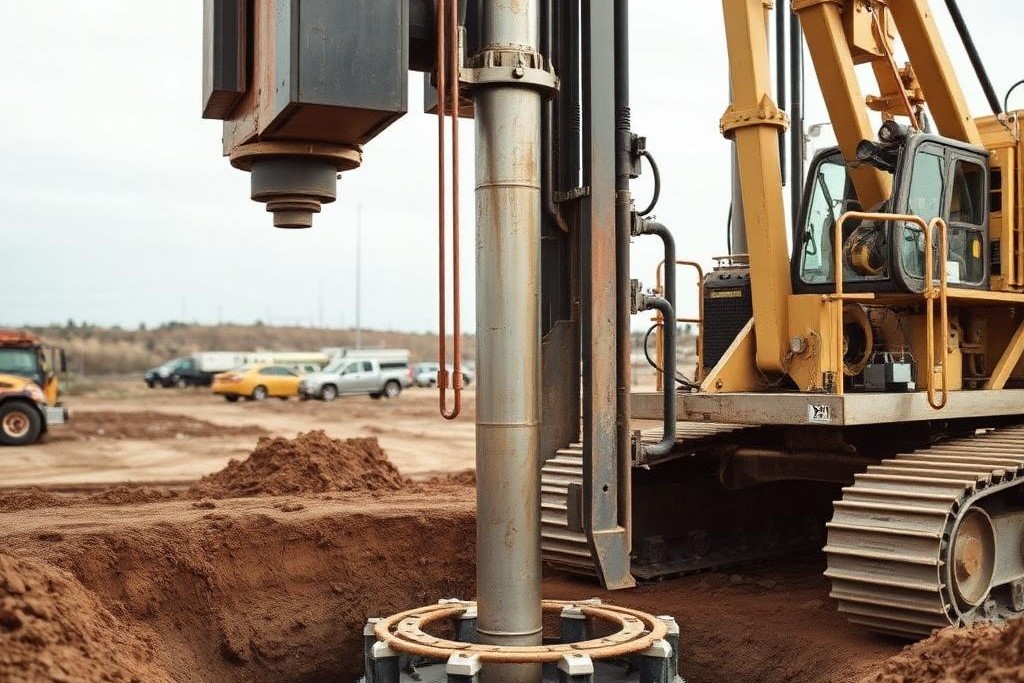
There’s a moment on every tough drilling job where the whole enterprise hangs in the balance. It’s not usually a dramatic crisis, but a quiet, technical decision made by the rig operator and the project superintendent. Often, it comes down to how to keep the hole open. On a site with variable soils—layers of running sand, soft clays, and loose gravels—this isn’t just a question, it’s the question. Get it right, and the job moves forward like clockwork. Get it wrong, and you’re looking at stuck tooling, a compromised shaft, and a busted schedule. This is the unglamorous, high-stakes core of the commercial drilling business. Forget the glossy brochures; success is measured in cubic yards of concrete placed in a clean, stable hole under difficult ground conditions. And the primary tools for achieving that are steel casing and drilling slurry.
The First 15 Feet: Setting Surface Casing
Every drilled shaft starts the same way: by disturbing the ground. The first few feet are often the most problematic. This zone is a mix of topsoil, backfill from previous construction, and whatever random debris has accumulated over the years. It’s weak, unconsolidated, and prone to sloughing. Before the main drilling can even begin, we have to isolate this unstable upper layer. This is the job of the surface casing, or starter casing.
A typical approach involves using a short section of casing, maybe 15 to 20 feet long, with a diameter slightly larger than the planned shaft. On a site where we’re drilling 48-inch shafts, we might set a 54-inch surface casing. The Cat 308 excavator scrapes the location level, and the drilling rig, a powerful machine like the CZM LR160, uses a drilling bucket or a short auger to excavate the initial hole. Then, using the rig’s main winch or a vibratory hammer, the casing is driven or lowered into place. This collar of steel provides a solid, safe entry point for the real work to begin.
This isn’t just about keeping loose dirt out. The surface casing establishes the exact location and verticality of the shaft. It provides a stable guide for the larger, deeper tooling to follow. It’s also a critical safety measure, preventing loose material from collapsing into the hole where it could trap tooling or endanger a worker. Finally, it creates a sealed environment at the top, which is essential if we need to introduce drilling fluids later on. Skipping or short-changing this step is a classic rookie mistake, and it’s one that often leads to bigger problems deeper down the hole.
Telescoping Casing for Deeper Problems
Sometimes, the unstable soil isn’t just at the surface. Geotechnical reports might show a thick layer of loose sand at 40 feet, sandwiched between two layers of competent clay. Drilling through the top clay is easy. But as soon as the auger hits that sand, the hole will want to collapse. The standard solution is to use temporary casing, but how do you get it 40 feet down? The answer is a telescoping approach.
We begin by setting a larger diameter casing through the upper unstable zone, perhaps a 60-inch casing to a depth of 50 feet, past the problematic sand layer. With that in place, the hole inside the casing is secure. We can then switch to a smaller diameter tool, say a 48-inch auger, and continue drilling the shaft down to its final depth in the stable soils below. The 60-inch casing ensures the shaft stays open and clean as we drill deeper.
This method requires careful planning and powerful equipment. The rig has to have enough torque and crowd force to advance the casing, and the tooling has to be sized correctly to pass through it. After the rebar cage is set and the concrete is being poured, the temporary casing is extracted. This is a delicate operation. The casing must be pulled smoothly, without disrupting the fresh concrete. A skilled operator on a modern rig can do this with precision, ensuring the integrity of the finished foundation element. Our Western Star 49X tractors are often busy hauling these heavy casing sections from one job to the next, keeping the production cycle flowing.
When Casing Won't Cut It: Enter Slurry
Casing is a fantastic tool, but it has its limits. Sometimes the unstable soil layer is simply too deep. Driving a 100-foot-long section of steel casing is often impractical from a cost, schedule, and equipment standpoint. In other cases, the soil is so saturated with groundwater that it’s like drilling into a sub-surface lake. Pumping the water out is a losing battle, and the hydrostatic pressure from the outside will collapse the hole instantly.
This is where drilling fluid, or slurry, comes into play. Instead of a physical barrier (steel), we use a hydrostatic one (heavy fluid). The principle is simple: if the pressure of the fluid inside the hole is greater than the pressure of the soil and water outside the hole, the hole will stay open. This is the essence of slurry drilling. We’re not just excavating anymore; we’re managing a complex hydraulic system in real-time.
The rig drills, the slurry is pumped in to displace the excavated material and support the walls of the hole, and the process continues to the full depth of the shaft. This technique dramatically expands the range of ground conditions where drilled shafts are a viable foundation solution, making it a cornerstone of modern deep foundation work, particularly for the massive data centers and semiconductor fabs that require stable foundations on less-than-ideal sites.
Bentonite vs. Polymer: A High-Stakes Choice
The two main types of drilling slurry are bentonite and polymer. Bentonite is a naturally occurring clay that, when mixed with water, swells up to create a thick, viscous fluid. It works in two ways: the weight of the fluid column provides hydrostatic pressure, and the clay particles themselves embed into the walls of the borehole, creating an impermeable "filter cake" that prevents groundwater from seeping in and soil from sloughing off.
Polymer slurries are a more modern alternative. These are synthetic, long-chain molecules that are mixed with water to create a fluid that is less dense than bentonite but has unique properties. Polymer slurry works by actively binding soil particles together, essentially creating a thin, strong, and flexible membrane that lines the borehole. It doesn’t form the same kind of thick filter cake as bentonite, which can be an advantage during the concrete pour.
The choice between bentonite and polymer is a critical one. Bentonite is an industry workhorse, it’s relatively inexpensive, and it’s very forgiving. However, it requires more equipment on site—agitation tanks, pumps, and desanders to clean the slurry for reuse—and disposal can be a significant cost. Polymer is lighter, cleaner to work with, and can often be disposed of more easily. But it’s more sensitive to water chemistry and requires a higher level of technical supervision. On a project supporting the power grid, where rock sockets are common, we might prefer polymer because it can result in a cleaner rock-to-concrete bond, which is critical for the performance of the foundation.
The Mechanics of a Slurry-Only Shaft
Executing a slurry shaft is a complex ballet of machinery and technique. The process starts with a large pit or tank to mix and hold the slurry. As the LR160 rig drills with a specialized slurry bucket, the fluid is continuously circulated into the hole. The returning, soil-laden slurry is then pumped to a desanding unit, which is essentially a set of vibrating screens and hydrocyclones that separate the drill cuttings from the fluid. The cleaned slurry is then returned to the holding tank to be used again.
Maintaining the properties of the slurry is a full-time job for a dedicated technician. They are constantly testing the fluid’s density, viscosity, and sand content. If the slurry is too heavy, it can be difficult to pump and can affect the concrete pour. If it’s too light, it won’t provide enough hydrostatic support, and the hole could collapse. This is a constant balancing act, performed under the pressure of the project schedule.
Once the drilling is complete and the hole is passed for cleanliness, the rebar cage is lowered through the slurry. Then comes the concrete pour, which is done using a tremie pipe that extends all the way to the bottom of the shaft. As the concrete is pumped in, it displaces the lighter slurry, which is pumped out from the top and collected. This entire process happens "in the blind," hundreds of feet below ground, guided by instrumentation and the crew’s experience.
Casing Through Voids and Karst
Some of the most challenging drilling in the country is in geologic formations known as karst, which are characterized by solution-weathered rock like limestone. This ground is a driller’s nightmare. You can be drilling through solid rock one minute, and the next the tool drops into a soft clay-filled void or even an open cavern. Trying to use slurry in these conditions is often futile; the slurry will just flow away into the voids, providing no support.
Here, casing is not just an option, it’s a necessity. The strategy is to drill and advance casing simultaneously. The CZM LR160 rig’s rotary head can be used to turn a casing twister, which physically screws the steel casing into the ground, cutting through the rock and soil. When a void is encountered, the casing bridges the opening, allowing the drilling to continue on the other side. It’s a slow, powerful, and methodical process.
This is where a rig with high torque and a stout build truly earns its keep. The forces involved in twisting a 60-inch diameter steel pipe through rock and clay are immense. Often, we’ll use a combination of methods—advancing casing through the upper karst layers, then transitioning to open-hole drilling in the more competent rock below to create the rock socket. The skill is in reading the rig’s gauges, listening to the sound of the tooling, and interpreting the feel of the machine to know what’s happening a hundred feet down.
Field Decisions and The Money
All these techniques—casing, slurry, telescoping—are tools in the toolbox. The real art and science of the business is knowing which tool to use, when, and how. These are not academic decisions made in an office. They are field decisions, often made on the fly, in response to ground conditions that are never exactly what the geotechnical report predicted. An experienced superintendent knows the cost and schedule implications of every choice.
For example, the decision to bring a vibratory hammer and a 60-foot piece of temporary casing to a site isn’t a trivial one. It means another truck, another operator, and hours of non-drilling time to set and extract the pipe. Is it cheaper than spending two days fighting a collapsing hole with the drill rig? That’s the calculation. A superintendent who can make that call correctly, more often than not, is an enormous asset.
Similarly, choosing to mobilize a full bentonite slurry plant versus trying to get by with a simpler polymer setup has major financial consequences. The bentonite plant might add fifty thousand dollars to the mobilization cost but could save a week on the schedule for a 20-shaft project. The interplay between equipment rental from the holding company, the cost of consumables, and the labor hours required is a constant, complex equation that the field leadership has to solve.
Experience is the Best Tool
You can have the best iron in the world—the most powerful rigs, the newest trucks, the fanciest tooling. DrillingCrust prides itself on providing top-tier, well-maintained equipment like our CZM rigs and Cat loaders. But the equipment doesn’t make the decisions. The equipment doesn’t read the ground. The equipment doesn’t have a gut feeling, born of twenty years of drilling in tough conditions, that the soil is about to change.
That is the domain of the crew. It’s the operator who feels the subtle change in torque that signals a transition from sand to clay. It’s the superintendent who walks the site and sees a small seep of water that tells him the groundwater model in the geotech report is wrong. It’s the team that has seen a dozen similar problems before and knows the three best ways to solve this one.
In the commercial drilling industry, especially in the high-stakes sectors of power infrastructure, data centers, and advanced manufacturing, the work is too complex and the ground too variable to be reduced to a simple formula. Success comes from pairing capable machinery with experienced people. The machinery provides the power. The people provide the judgment. One without the other is just a good way to lose money. Together, they are how the hardest work gets done.
Almost every commercial drilling project involves at least one layer of soil that will not stand up on its own. Loose sands, saturated silts, and collapsing gravels are the enemies of a clean, on-spec drilled shaft. Casing methods are how experienced crews keep those holes open and keep the schedule on track.
Temporary vs. permanent casing
Temporary casing is set to protect the upper portion of a shaft while drilling advances, and pulled during the concrete pour. Permanent casing stays in place as part of the finished foundation, often when scour, corrosion, or lateral load conditions call for it. Which one gets used depends on the geology, the design loads, and the environment.
Slurry as an alternative
Where casing is impractical, drilling fluids — bentonite or polymer slurries — can stabilize the hole hydraulically. Slurry methods add complexity but expand the range of sites where drilled shafts are feasible.
Why it takes experience
Choosing casing over slurry, sizing the casing correctly, and knowing when to switch approaches mid-shaft are field decisions. The rigs and tooling matter, but the operator's judgement is what turns a challenging site into a productive one. Modern rigs paired with experienced crews are what let a commercial drilling business bid — and win — the hardest work.
Working in commercial drilling?
Reach out to a DrillingCrust representative to talk projects, partnerships, or the fleet.

A holding company operating across the U.S. commercial drilling industry. We invest capital, provide funding, and lease equipment to established operators building the foundations of modern American infrastructure.
Contact
© 2026 DrillingCrust Holdings LLC. All rights reserved.