
Why Commercial Drilling Is the Overlooked Backbone of U.S. Infrastructure
May 22, 2026 · 7 min read · By Thomas Charles
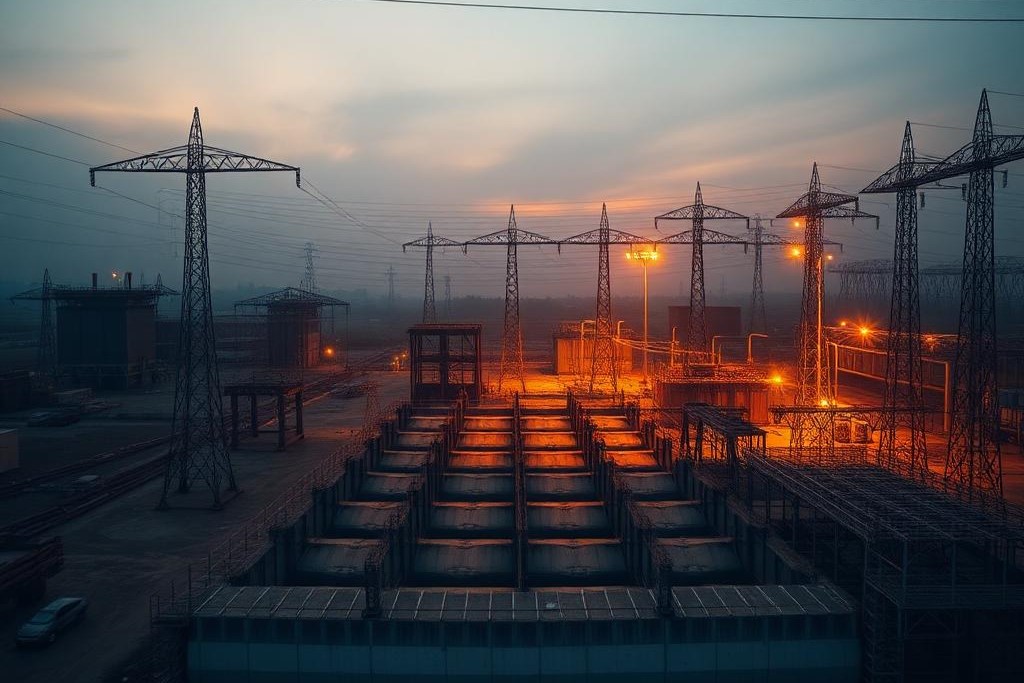
Ask most people to describe how a new data center gets built, and you will hear plenty about servers, cooling, chip supply, and interconnects. Almost no one will mention the drilling contractor. Yet that contractor is the first specialty trade on site, their performance setting the schedule and the standard for everything that follows. Forget the ribbon-cutting ceremony; the real start of any major infrastructure project is the sound of a hydraulic rotary rig biting into the earth. Commercial drilling—the installation of drilled shafts, caissons, rock sockets, and earth anchors—is the quiet, indispensable backbone underneath nearly every critical asset in the modern U.S. construction economy.
Let's clear up a common misconception. Commercial drilling is not the oil and gas industry. We're not exploring for hydrocarbons. The rigs, the crews, the engineering, and the customer base are entirely different. Our business is manufacturing deep, high-capacity foundations for vertical structures. When a multi-story building needs to be anchored to bedrock, a transmission tower needs to withstand hurricane-force winds, or a massive substation transformer needs a foundation that can resist decades of vibration and thermal cycling, the answer is a specialized drilled foundation. These are not simple holes; they are precisely engineered structural elements placed deep within the earth.
The process starts with a geotechnical report, a document that is our bible and our curse. It tells us the soil and rock layers we will encounter—or at least, what the geotech’s boring sample suggested we would find. Our job is to turn that engineering drawing into a physical reality. That means mobilizing heavy equipment, often to remote or tightly constrained sites. A typical spread includes a primary production rig like our CZM LR160, a support excavator like a Cat 308 for managing spoils and setting tooling, and a Cat 299D3 track loader for site logistics. The crew doesn’t just drill a hole; they are constantly managing soil conditions, preventing sloughing, placing a full-length reinforcing steel cage, and executing a monolithic concrete pour that can be over a hundred feet deep.
This work is a constant battle against geology and physics. You might hit a rock lens the geotech missed, forcing a change in tooling from an earth auger to a core barrel. You might encounter a perched water table that threatens to flood the excavation, requiring casing or drilling slurry to keep the hole open and stable. Every drilled shaft is a custom manufacturing job performed blind, hundreds of feet below ground. This is what separates the seasoned professionals from the newcomers. The ability to read the torque on the Kelly bar and the feel of the machine, to anticipate problems before they cripple the schedule, is an earned skill. That is the barrier to entry.
The Unseen Foundation of the Digital and Electric Age
The best way to understand the scale of this industry is to look at what's being built. America is in the first decade of the largest energy infrastructure build-out since the 1950s. The grid that powered the 20th century is being rebuilt to handle a two-way flow of power from renewables and to support a massive new layer of electricity demand. At the same time, the AI boom is driving exponential growth in hyperscale data centers, each consuming as much power as a small city. Add to that the reshoring of critical manufacturing, from semiconductor fabs to EV battery plants, and you have a historic convergence of construction demand.
Every single one of these projects requires deep foundations. A new 500-kilovolt transmission line marching across the desert is supported by towers, and each tower leg sits on a drilled shaft, sometimes over 100 feet deep and 8 feet in diameter, engineered to resist immense uplift and shear forces. A new Google or Microsoft data center might look like a simple warehouse from the outside, but it sits on a forest of concrete piers drilled to bedrock to ensure zero settlement. A new substation to connect a solar farm to the grid is a complex web of steel structures, breakers, and transformers, all anchored by elaborate drilled pier and anchor bolt configurations.
Let’s take a single transmission tower as a microcosm. The foundation design isn’t arbitrary. The engineer calculates the maximum wind load on the tower and the lines it will carry, the soil’s capacity to resist that load, and the required safety factor. This translates into a prescription for us: four drilled shafts, each 6 feet in diameter, extending 60 feet into the ground, with a rock socket 10 feet into the competent bedrock below. Our task is to execute that design flawlessly, documenting every step, because the integrity of a billion-dollar power line rests on the quality of our work. The drilling crew is the first link in a very long and expensive chain.
The Anatomy of a Drilling Operation
A project begins not with a drill bit, but with a bid package. We dissect the plans and the geotechnical report, identifying the specified pier diameters, depths, and reinforcing steel requirements. We formulate a plan: which rig, what tooling, how many crew members, and how many days. We factor in mobilization—the complex logistics of moving an 80-ton rig, a 10-ton excavator, and support equipment to the site using our Western Star tractors and specialized trailers. A single mobilization can be a multi-day affair involving permits, escorts, and careful route planning.
Once on site, the rhythm of the work takes over. The rig operator, the heart of the crew, positions the machine over the survey stake and begins the cut. The support excavator operator works in tandem, clearing the spoils (drilled earth) from the auger as it comes out of the hole. A ground hand assists with tooling changes and measurements. For a deep shaft, this process repeats for hours: drill a section, spin off the spoils, add another section of Kelly bar, and go back down. It’s a carefully choreographed dance of heavy iron.
The critical phase is after the hole is cleaned to its final depth. The reinforcing steel cage, often weighing thousands of pounds, is lifted by the excavator or a crane and carefully lowered into the shaft. Then comes the concrete. A steady train of ready-mix trucks arrives, and the concrete is pumped to the bottom of the excavation through a tremie pipe. This method displaces any water or slurry upwards, ensuring a solid, continuous column of concrete from bottom to top. A delay in the concrete supply can ruin the pour and compromise the foundation, turning a $30,000 drilled pier into a costly demolition and re-drill job.
The Economics of Iron and People
This is a fiercely capital-intensive business. A new Tier 4 Final hydraulic rotary rig from a manufacturer like CZM, Soilmec, or Bauer can cost well over a million dollars. The support equipment—excavators, loaders, telehandlers like our JLG 2733 used for handling rebar cages and tooling—adds hundreds of thousands more. Then come the trucks to move it all and the maintenance to keep it running. DrillingCrust’s model is built on this reality; we provide the capital for this top-tier iron, leasing it to skilled operating companies so they can focus on execution without tying up their balance sheets.
This capital barrier is a significant reason the industry remains fragmented. Many of the best operators are family-owned businesses that have been around for decades. They built their companies one rig at a time, pouring profits back into iron and training. Their competitive advantage isn't a slick marketing deck; it's a reputation for hitting bedrock on schedule, a safety record that gets them on the most demanding job sites, and a crew that has seen every conceivable geological problem and knows how to solve it.
You cannot just buy your way to the top of this industry. The knowledge held by a 30-year veteran rig operator or a superintendent who has managed foundation projects for three different generations of power plants is a currency all its own. It's the ability to listen to the sounds of the rig and know the difference between gravel and cobbles, or to look at a spoil pile and identify a changing soil stratum before it becomes a problem. This expertise is the true asset, and it’s what clients are ultimately paying for.
When the Drill Rig Stops, the Project Stops
In construction, the schedule is everything. Project owners, general contractors, and all the subsequent trades live and die by the critical path method. The drilling contractor is almost always the first specialty trade on that path. Our work is the necessary predecessor for every other activity. The steel erector can’t start until the anchor bolts are set in our concrete. The concrete contractor can’t pour the slab until our piers are complete. The utility contractor can’t set their poles until we have drilled the foundations.
This is why a delay in our scope of work has such devastating downstream consequences. If we are two weeks late, it is not a simple two-week slide in the overall project. It means the structural steel fabricator misses their production window. It means the substation equipment, which has a 24-month lead time, might arrive before the foundations are ready to accept it, creating a logistical nightmare. A small delay at the very beginning of a project ripples outwards, amplifying as it goes. A twelve-month delay on a new hyperscale data center campus is rarely about the servers or the chillers; it is almost always rooted in the site work and utility interconnect, and the foundation drilling is the first and most critical part of that sequence.
The Quiet Backbone
So while commercial drilling may operate in the dust and mud, far from the clean rooms of a semiconductor fab or the trading floors of a Wall Street bank, it is the essential first step. It is the unseen but non-negotiable work that makes everything else possible. The towers that carry our power, the factories that build our cars, and the data centers that house our digital lives all stand on foundations they cannot do without. The unglamorous, capital-intensive, and expertise-driven nature of this business is precisely what makes it such a durable and critical component of the American economy. It is, and will remain, the quiet backbone of our infrastructure.
Ask most people to describe how a new data center gets built, and you will hear plenty about servers, cooling, chip supply, and interconnects. Almost no one will mention the drilling contractor. Yet that contractor is the first specialty trade on site, and its work sets the schedule for everything else. Commercial drilling — the installation of drilled shafts, caissons, rock sockets, and earth anchors — is the quiet backbone underneath nearly every major project in the modern U.S. construction economy.
What commercial drilling actually is
Commercial drilling is not the oil and gas industry. The rigs, the crews, the engineering, and the customer base are all different. Commercial drilling exists to install deep, load-bearing foundations for buildings, towers, and industrial equipment. When a transmission tower needs to stand up to a hurricane, when a data center needs 200 feet of concrete pier to reach bedrock, when a substation needs anchor bolts capable of resisting decades of vibration, the answer is a specialized drilled foundation.
That means the contractor arrives with a hydraulic rotary rig, a Kelly bar, purpose-built tooling, a support excavator, a track loader, and a rebar cage. It also means the contractor absorbs a level of geological, safety, and engineering complexity that keeps competitors out. The industry is fragmented, capital-intensive, and full of long-standing family-owned operators — a combination that produces genuine barriers to entry.
Why the market is bigger than it looks
The best way to appreciate how much commercial drilling underpins the U.S. economy is to look at what is being built. The country is in the early years of the largest utility rebuild since the Interstate Highway System. Transmission lines built in the 1960s and 1970s are being replaced. New substations are being permitted every quarter to interconnect renewables and hyperscale load. On top of that base, AI-driven data center demand is layering an entirely new asset class onto the grid.
None of that gets built without drilled foundations. And because the drilling has to happen first, drilling capacity is often the true bottleneck on the project schedule. When a hyperscaler tells its board that a new campus is delayed by twelve months, the reason is rarely the servers. It is usually the utility interconnect, and inside that interconnect, it is often the availability of drilling crews.
Why the niche stays overlooked
Commercial drilling looks unglamorous from the outside. It is dusty, physical, and regional. It does not produce the same headlines as chips or clean energy. That opacity is exactly why the operators who own the best iron and the best crews earn premium margins — and why the trade remains critical to almost every major build in the country.
Working in commercial drilling?
Reach out to a DrillingCrust representative to talk projects, partnerships, or the fleet.

A holding company operating across the U.S. commercial drilling industry. We invest capital, provide funding, and lease equipment to established operators building the foundations of modern American infrastructure.
Contact
© 2026 DrillingCrust Holdings LLC. All rights reserved.