Equipment Leasing Economics in a High-Utilization Drilling Fleet
June 26, 2026 · 7 min read · By Thomas Charles
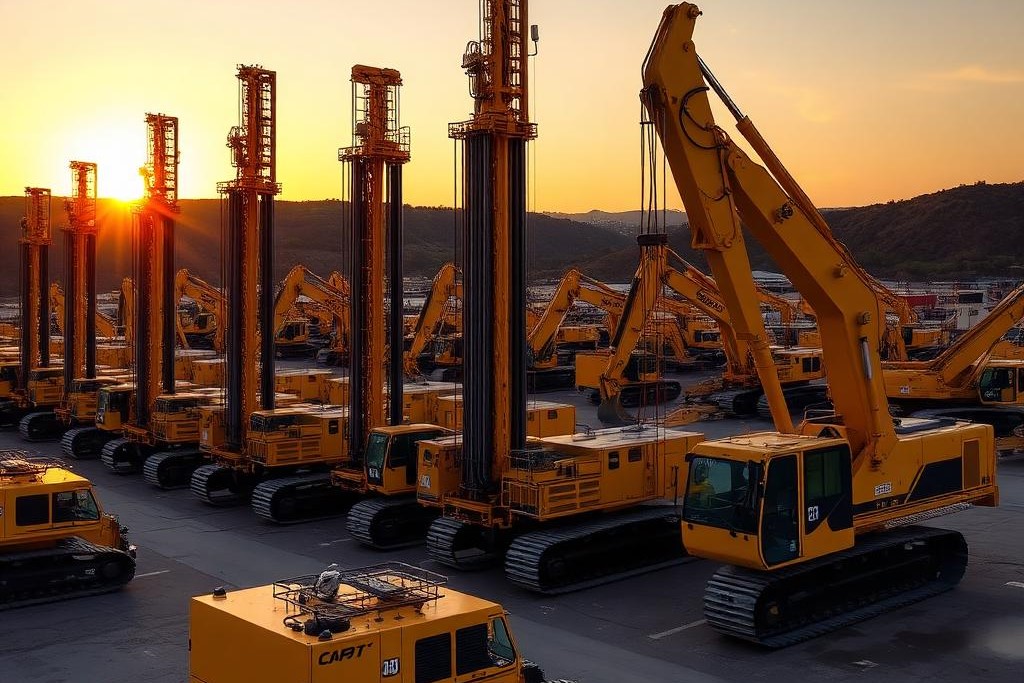
Equipment leasing is one of the oldest financing tools, but its modern application in specialty construction bears little resemblance to financing a fleet of pickup trucks. In the world of commercial drilling, the stakes are higher. The assets are bigger, the capital outlay is immense, and the cost of failure is measured in project delays that can ripple through a billion-dollar infrastructure build. Getting the economics of a drilling fleet right is less about financial engineering and more about a deep, field-level understanding of the iron, the crews, and the jobs. At its core, a well-structured leasing program is a partnership, a discipline that aligns the interests of the capital provider with the operator on the ground. When it works, it provides the operator with the world-class capacity they need to win and execute, while the owner earns a predictable return on an asset that is properly maintained and deployed.
The High-Utilization Imperative
A piece of heavy iron only generates revenue when its engine is running and it’s turning dirt. This is the central truth of any equipment business. In many construction sectors, utilization is a constant battle against seasonality, economic cycles, and lumpy project pipelines. This is where the commercial drilling space, particularly in the current environment, stands apart. The secular tailwinds from the U.S. power grid modernization, the relentless buildout of AI data centers, new semiconductor fabs, and EV battery plants create a demand profile that is less cyclical and more structural. The result is a deep backlog of non-discretionary projects.
For a flagship hydraulic rotary rig, this translates into a remarkably high potential for utilization. Unlike a piece of general earthmoving equipment that might be rented for a few weeks at a time, a rig like a CZM LR160 is often booked for months, if not years, on large-scale foundation projects. High utilization fundamentally changes the financial model. It dampens the swings in revenue, making cash flows more predictable and stable. This stability is the bedrock of a successful leasing strategy, as it allows for more accurate forecasting of an asset’s earning potential and, critically, its value at the end of a lease term.
This environment allows an equipment holding company to function more like a utility than a traditional rental house. The focus shifts from managing short-term availability to structuring long-term capacity partnerships with qualified operating companies. The high-demand environment de-risks the asset by ensuring it can be consistently deployed, turning a multi-million dollar piece of steel into a reliable, cash-flowing instrument. It’s this predictability that underpins the entire economic model.
Bare Lease vs. Managed Service
In heavy equipment, lease structures generally fall into two categories. One is a "wet lease" or managed service, where the owner provides the equipment, the crew, fuel, and maintenance—a turnkey drilling service. The other is a "bare metal" or dry lease, where the owner provides only the asset itself. The operating company, the lessee, takes full responsibility for providing a qualified crew, fuel, insurance, and routine maintenance. For a capital provider focused on asset ownership and financial performance, the bare lease model presents a much cleaner and more aligned structure.
The bare lease creates a clear division of labor and responsibility. The equipment owner is a capital partner, expert in acquiring, financing, and managing the asset lifecycle. The operating company is the service provider, expert in bidding jobs, managing crews, and executing complex drilling operations on a construction site. This separation is critical. The operator controls the site, the schedule, and the personnel; therefore, they are in the best position to manage the day-to-day performance and safe operation of the equipment.
This structure aligns incentives. The operator’s success is tied to their ability to keep the rig running efficiently and complete the job. The owner’s success is tied to the operator’s success, which generates the lease payments. A wet lease, by contrast, can blur these lines, creating potential conflicts over crew performance, scheduling decisions, and site condition responsibilities. The bare lease places operational risk precisely where it belongs: with the company managing the operation.
The Mechanics of Maintenance Covenants
A lease agreement is worthless if the asset is returned in a state of disrepair. This is why disciplined maintenance covenants are non-negotiable. They are not about micromanaging the operator; they are about preserving the long-term value of a high-capital asset. A well-structured lease goes far beyond a simple payment schedule. It embeds clear, enforceable standards for equipment care that both parties agree to from the outset.
Modern telematics are the first line of enforcement. Systems like Caterpillar’s VisionLink or Platform Science on our transport fleet provide real-time data on engine hours, fuel consumption, fault codes, and GPS location. This data stream is the ultimate source of truth. It allows us to verify utilization reports from the operator and, more importantly, provides early warnings of potential mechanical issues. An alert for high engine temperature or low hydraulic pressure can trigger a conversation about immediate service, preventing a minor issue from becoming a catastrophic failure.
The lease must also codify the manufacturer’s recommended service intervals. For a rig like the CZM LR160, this means oil changes, hydraulic filter replacements, and undercarriage inspections are performed based on operating hours, not the calendar. We require documentation and service logs from the operator as proof of compliance. Furthermore, the lease grants the lessor the right to conduct physical inspections of the equipment on a periodic basis. These inspections are not disruptive, but they are thorough. We look for signs of deferred maintenance or abuse—excessive wear on drilling tools, damaged hydraulic lines, or sloppy housekeeping in the operator’s cab. This documentation and inspection regime ensures the asset is maintained to a consistent standard, which directly protects its residual value.
Valuing the Iron: Residuals and Secondary Markets
Every lease calculation hinges on one critical variable: the residual value. This is the estimated fair market value of the equipment at the end of the lease term. The monthly lease payment is essentially financing the depreciation of the asset from its initial cost down to its projected residual value. The lessor, the equipment owner, takes the risk that this projection is wrong. If the rig is worth less than anticipated upon its return, the owner bears that loss. This is why equipment selection is a crucial discipline.
Our strategy is to anchor the fleet around iron from major manufacturers with strong brand recognition, OEM support, and deep secondary markets. Platforms from companies like Caterpillar and CZM are known quantities. Fleets across the country run them, technicians know how to work on them, and parts are readily available through established dealer networks. This widespread adoption creates a liquid aftermarket. When it comes time to sell a used Cat loader or CZM rig, there is a large pool of potential buyers who understand its value and are confident in their ability to support it.
Contrast this with off-brand or niche equipment. While such machines may have a lower initial purchase price, they often carry a significant residual value risk. The secondary market is thinner, parts may be harder to source, and fewer technicians are trained to service them. This makes them harder to re-lease and harder to sell, forcing a steeper discount. A lower upfront cost is a false economy if the asset loses value precipitously. By sticking to well-supported, widely-used platforms, we mitigate this residual value risk and create a more stable and predictable asset lifecycle.
The Cost of Downtime: A Field Example
The importance of maintenance and quality equipment becomes crystal clear when you analyze the cost of downtime on a critical-path project. Imagine a foundation drilling crew working on a new transmission substation. The drilled shafts are the first step; nothing else happens until they are complete. The general contractor’s schedule is built around the drilling operator hitting their marks. Let’s say the all-in day rate for a flagship rig, a skilled four-man crew, and support equipment is in the neighborhood of $15,000.
Now, imagine the rig goes down with a major hydraulic failure. A cheap, off-brand component fails catastrophically. The part is not stocked at a local dealer and must be flown in, a process that takes three days. For those three days, the project grinds to a halt. The direct cost to the drilling operator is not just the repair bill. It’s three days of lost revenue—$45,000 that is gone forever. It’s the cost of an idle crew, who must be paid whether the rig is turning or not. And it’s the potential for back-charges or schedule penalties from a furious general contractor whose entire project is now behind.
This is the true cost of cutting corners. It’s a cascading failure that extends far beyond the broken part itself. This is why our lease agreements are structured to incentivize proactive, preventative maintenance, and why we invest in equipment known for its reliability. The slightly higher initial cost or the rigorous maintenance schedule is an insurance policy against the catastrophic financial and reputational damage of unexpected downtime.
Aligning Incentives for the Long Haul
Ultimately, a successful equipment leasing strategy in this industry comes down to a single principle: incentive alignment. Direct equipment leasing works best when the equipment owners financial interests are perfectly aligned with the operator's operational interests. The goal is to create a symbiotic relationship where both parties benefit from the same outcome: a well-maintained rig working at maximum safe utilization.
The structure we employ is designed to achieve this alignment. By using a bare lease, we place operational control and responsibility with the drilling company that lives on the job site every day. By using telematic data and strict maintenance covenants, we ensure the operator has a powerful incentive to care for the asset as if it were their own. Their ability to keep the machine running and avoid costly downtime directly impacts their profitability.
This isn’t a passive financial arrangement. It is an active partnership built on a shared understanding of what it takes to succeed in the field. The operator gains access to a world-class fleet of equipment without the crushing upfront capital expense, allowing them to compete for and execute the largest and most demanding infrastructure projects. The holding company, in turn, invests in top-tier assets and receives a steady, contracted cash flow based on the operator’s success. It transforms capital-intensive iron into a predictable financial instrument, all while enabling the urgent and necessary work of rebuilding American infrastructure.
Equipment leasing is one of the oldest financing tools in the world. In a specialty construction niche like commercial drilling, the mechanics get more interesting: utilization is high, downtime is expensive, and the crew running the equipment is as important as the equipment itself. Getting the details right is what separates a well-run fleet from an average one.
The utilization question
A leased rig only earns for its owner when it is running. In sectors like light construction, rental fleets often see wide swings in utilization by season. Commercial drilling is different — the current backlog of transmission, substation, and data-center work is deep enough that qualified operators can keep flagship rigs running most of the year. That utilization pattern makes lease income more predictable and residual values more stable.
Maintenance and covenants
A lease is only as good as the maintenance behind it. Well-structured drilling leases embed maintenance schedules, insurance requirements, and inspection rights. The result is that the asset comes back to the lessor in a known condition, and residual value assumptions hold up.
The role of manufacturer support
Working with well-supported iron matters. Rigs backed by strong manufacturer service networks are easier to keep running, easier to re-lease, and easier to sell in secondary markets. That is one reason we anchor our fleet around widely-supported platforms.
Aligning incentives
Direct equipment leasing works best when the operator's incentives are aligned with the equipment owner's. That usually means covenants around utilization reporting, real-time telematics, and clear responsibilities for major repairs. Done well, a leasing arrangement delivers steady, contracted cash flow to the owner and predictable capacity to the operator.
Working in commercial drilling?
Reach out to a DrillingCrust representative to talk projects, partnerships, or the fleet.
A holding company operating across the U.S. commercial drilling industry. We invest capital, provide funding, and lease equipment to established operators building the foundations of modern American infrastructure.
Contact
© 2026 DrillingCrust Holdings LLC. All rights reserved.