
EV Manufacturing Plants and the Heavy Foundations Underneath
February 20, 2026 · 7 min read · By Thomas Charles
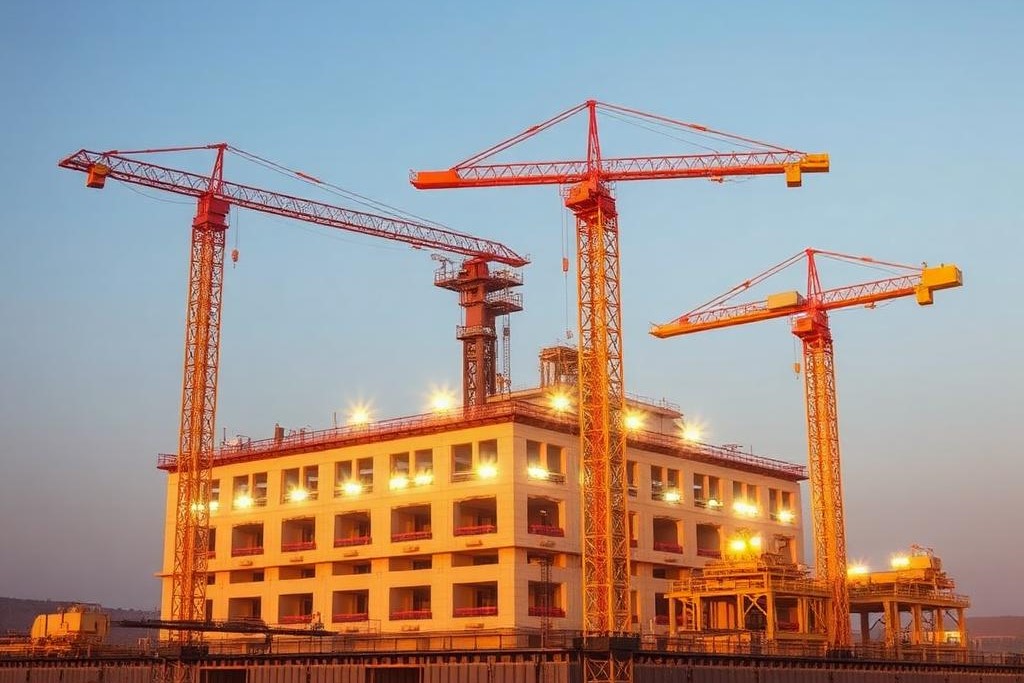
The shift to electric vehicles is quietly triggering a second, less visible boom in an industry far from the showroom floor. While headlines focus on the multi-billion dollar price tags of new EV and battery manufacturing plants, the real story for the construction sector starts much deeper. It begins in the dirt, with the heavy iron of commercial drilling crews. These massive industrial facilities, forming a new "Battery Belt" across the American Midwest and Southeast, are rising on foundations that are among the most demanding in modern construction. The sheer scale and specialized nature of this work mean that for many of these giga-projects, the drilling contractor isn't just another sub on the schedule; they are the pacing item for the entire build.
Reading the Ground First
Before the first piece of steel is erected or a single yard of slab concrete is poured, the geotech report lands on the desk. This document, filled with soil boring logs, rock quality designations, and water table data, dictates everything that follows. For a sprawling, high-tech facility like an EV plant, it almost always points to one conclusion: shallow foundations won't cut it. The combination of poor surficial soils and extreme structural loads means the only path forward is to go deep.
The core problem is settlement. The high-precision robotic arms, stamping presses, and automated assembly lines that define modern vehicle manufacturing are incredibly sensitive to differential settlement. If one part of the foundation slab sinks even a fraction of an inch more than another, it can throw an entire production line out of alignment, leading to costly shutdowns and quality control nightmares. These plants are built for decades of relentless, 24/7 operation. The foundations must provide absolute stability, and that requires transferring the immense structural loads past the weak upper soils to competent bearing strata—dense gravels, hardpan, or solid bedrock—that might be 40, 60, or even 100 feet down.
The Weight of an Industrial Revolution
The loads inside an EV plant are staggering. A single stamping press line used for forming body panels can weigh thousands of tons and generates significant dynamic forces during operation. The sheer density of robotic welding and assembly stations, each with its own footprint and vibration characteristics, creates a complex loading map across a floor plate that can span millions of square feet. This isn't a warehouse floor designed for forklifts; it's a machine base disguised as a building.
To handle these demands, engineers specify drilled shafts, also known as drilled piers or caissons. The process is straightforward in concept but demanding in execution. A large-diameter hydraulic rotary rig, like the CZM LR160s in our fleet, uses heavy-duty augers and rock tooling to excavate a shaft to the specified depth. A cylindrical steel reinforcement cage is then lowered into the hole, and the entire shaft is filled with high-strength concrete. The result is a massive, subterranean column that acts like a steel and concrete root, anchoring the plant to the earth.
Each shaft is a custom-engineered solution. The diameter, depth, reinforcement design, and concrete strength are all calculated based on the specific load it will carry and the geotechnical conditions at its exact location. A single building might require hundreds of these piers, each one a critical structural element. The successful installation of these shafts is the first, non-negotiable step on the critical path of the project schedule.
Battery Plants: A Heavier Challenge
As demanding as an EV assembly plant is, the adjoining battery cell manufacturing facilities present an even more intense set of foundation challenges. The raw materials and finished goods in the battery supply chain are incredibly dense and heavy. The machinery for mixing, coating, and calendaring anode and cathode materials is substantial, but the real load comes from the sheer mass of stored materials and finished battery cells, which can fill multi-story racking systems.
Beyond the weight of the product itself, battery plants come with a heavy complement of safety and support infrastructure. Fire suppression is a primary concern, often requiring massive, dedicated water storage tanks that impose tremendous point loads on the foundation. The handling of volatile chemicals and electrolytes necessitates robust containment structures, treatment facilities, and specialized climate control systems, all of which add to the dead load the foundation must support.
These facilities are, in essence, heavy industrial chemical plants operating at an unprecedented scale. The margin for error in foundation performance is zero. The drilled shafts supporting these structures must be engineered and installed with exacting precision to ensure the long-term integrity and safety of the facility.
The Second Wave of Work: Powering It All
The drilling demand doesn't stop at the factory wall. A modern EV plant consumes a tremendous amount of electricity, requiring a direct and robust connection to the power grid. This triggers a second wave of drilled foundation work that ripples out from the project site. The first piece is a new electrical substation, a complex web of transformers, circuit breakers, and switchgear, where every single steel support structure stands on a set of drilled shaft foundations.
Next comes the transmission tap. The plant needs to be fed by high-voltage lines, which often means building new transmission towers to connect the substation to the existing regional grid. Whether they are tall lattice towers or sleek monopoles, these structures require deep foundations to resist the immense cantilever forces imposed by wind and wire tension. This work often takes place in rural easements, across farmland, or in wetlands, where our tracked equipment, like the Cat 299D3 XE loaders and Cat 308 excavators, is essential for site access and support.
The combined footprint of the plant, the substation, and the new transmission corridor generates a significant, concentrated pulse of drilling work in a specific geographic area. For a drilling contractor, winning a role on one of these projects often means committing a full equipment package and crew for an extended duration.
The Bottleneck: Crews, Iron, and the Critical Path
On a multi-billion dollar project, the most expensive thing you can do is nothing. When a job site worth millions per day in overhead sits idle, the schedule is bleeding cash. This is why general contractors are laser-focused on the critical path, and on an EV plant build, the drilling contractor is squarely on it. The steel erectors can’t work until the anchor bolts are set in the finished piers. The underground utility crews can’t move in until the big rigs are done. The entire project hinges on the steady, predictable, daily production of finished drilled shafts.
This is where capacity becomes the governing constraint. The bottleneck isn't the availability of concrete or rebar; it's the supply of capable drilling rigs and, more importantly, experienced crews. Operating a 100-ton hydraulic rig is a craft learned over years, reading the subtle feedback from the controls to understand what’s happening 80 feet below ground. Is the auger hitting a rock seam? Is the soil threatening to collapse? Does a temporary steel casing need to be spun in?
An experienced operator, supported by a skilled ground crew and reliable equipment, can navigate these challenges and keep the project on track. An inexperienced crew or a poorly maintained rig can bring a site to a complete standstill for days, waiting for a mechanic, a different piece of tooling, or a new plan from the engineers. This risk of delay is why prime contractors are now intensely focused on securing drilling partners with a proven track record and a fleet of modern, well-supported machines.
The Structural Scarcity Driving the Business
The sheer volume of concurrent projects—from EV plants and data centers to semiconductor fabs and the grid modernization that connects them all—has created a structural scarcity of high-tier drilling capacity in key regions. The demand for crews who can reliably execute complex, schedule-critical drilled foundation work far outstrips the available supply.
This dynamic shapes the entire business landscape. General contractors are looking further ahead, attempting to lock in commitments from trusted drilling companies months or even years in advance. They recognize that paying a premium for a top-tier crew and an equipment package—a modern rig, dedicated support machines like telehandlers and loaders, and reliable transport—is a bargain compared to the cost of a single week of project-wide delays.
For a company like ours, which focuses on capitalization and leasing of modern equipment to skilled operating partners, this environment underscores the value of our model. Providing access to state-of-the-art iron, from the CZM rigs down to the Ford F-450 work trucks, helps our partners meet this surging demand. It enables them to field the efficient, reliable, and safe operations that these critical national infrastructure projects require, ensuring the foundation of this industrial build-out is a solid one.
Electric vehicle assembly plants and battery facilities are being built across the Midwest and Southeast at a pace that would have been hard to imagine ten years ago. What often gets missed is how much of that construction begins as heavy foundation work.
Why these plants are drilling-heavy
EV manufacturing plants pair very heavy production equipment with expansive floor plates. Battery cell facilities add fire suppression, chemical handling, and climate control loads that further increase foundation demands. Drilled shafts and drilled piers are common answers for the concentrated loads and settlement-sensitive equipment.
The utility side of the story
As with data centers and fabs, the plant itself is only part of the drilling demand. The substations, transmission taps, and site utilities that feed a modern EV plant generate a second wave of drilled foundation work in the same region.
Regional capacity is the constraint
The bottleneck is not permitting or steel — it is often drilling capacity. Operators with modern iron and experienced crews are already the pacing item on multiple regional EV projects. That structural scarcity is one of the reasons commercial drilling is such an attractive place to invest in modern equipment.
Working in commercial drilling?
Reach out to a DrillingCrust representative to talk projects, partnerships, or the fleet.

A holding company operating across the U.S. commercial drilling industry. We invest capital, provide funding, and lease equipment to established operators building the foundations of modern American infrastructure.
Contact
© 2026 DrillingCrust Holdings LLC. All rights reserved.