
Fleet Composition That Wins Bids: Excavators, Skid Steers, and Haul Trucks
July 17, 2026 · 6 min read · By Thomas Charles
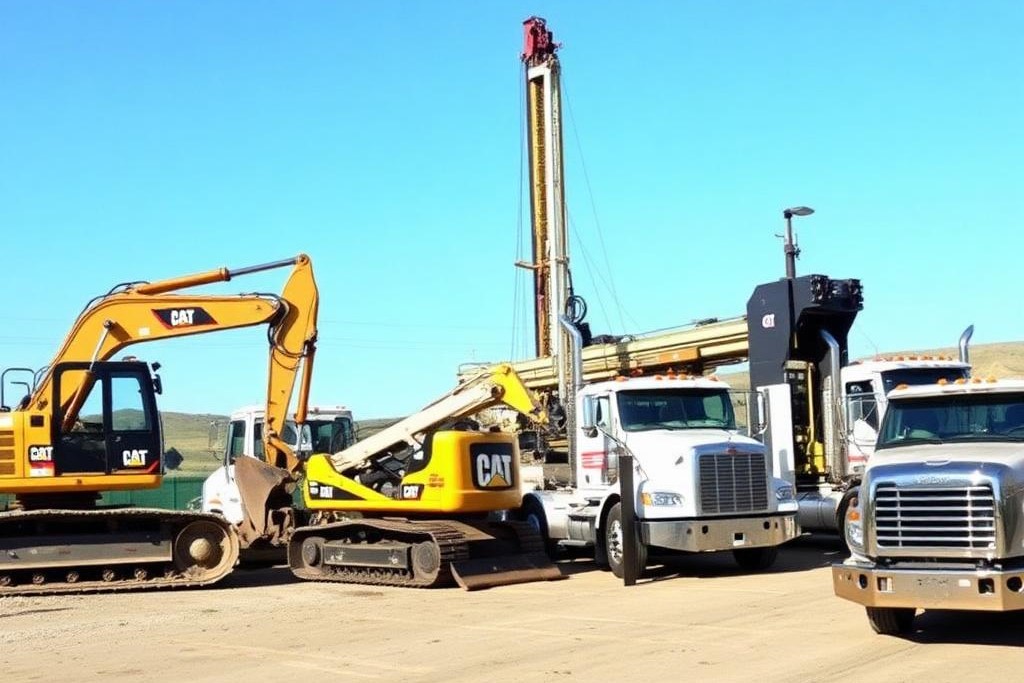
A drilling rig without a properly matched support fleet is a monument to wasted capacity. The industry is full of stories about million-dollar rigs sitting idle, waiting for a spoil pile to be cleared, a rebar cage to be set, or a lowboy to show up for the next move. On a commercial drilling site, the rig is the heart of the operation, but it doesn’t work alone. What actually drives revenue and completes projects on schedule is a coordinated system of equipment that keeps material moving, tooling in place, and the rig itself productive. At DrillingCrust, we don’t just supply iron; we invest in and lease entire operational systems to drilling companies. This philosophy—that fleet composition is a competitive weapon—is what separates a crew that’s merely busy from one that’s truly profitable.
The Rig Gets the Glory, The Fleet Gets the Work Done
The industry sells itself with dramatic photos of massive rotary rigs boring into the earth. It’s understandable. A machine like our CZM LR160, with its impressive torque and reach, is the centerpiece of any deep foundation project. But the raw drilling capacity of the rig is only a fraction of the total project equation. The critical, and often overlooked, variable is utilization. How many minutes in an hour is that drill bit actually turning? The answer to that question lies not with the rig operator, but with the support crew and the equipment they have at their disposal.
The workflow on a drilled shaft project is a continuous cycle: drill, clean, place cage, pour concrete. Any hiccup in that cycle brings the entire operation to a halt. If the excavator can’t keep up with the spoil coming out of the hole, the rig waits. If a rebar cage is sitting on a delivery truck because there’s no machine with the precision to unload and place it, the rig waits. If the rig is ready to move to the next hole but the ground is too soft for the support gear, the rig waits.
This is why our model focuses on providing a complete package. We lease the CZM LR160 hydraulic rotary rig as the core, but it’s supported by a carefully selected fleet: Cat 308 excavators, Cat 299D3 XE track loaders, JLG 2733 telehandlers, Western Star 49X tractors with both drop deck and lowboy trailers, and a team of Ford F-450 work trucks. Each piece is chosen not just for its standalone capability, but for how it integrates with the others to turn a drilling rig’s potential into billable production.
Spoil, Cages, and Casings: The Excavator’s Domain
The most immediate partner to the drill rig is the excavator. Its primary job is simple but relentless: spoil removal. A typical commercial project might involve dozens of shafts, each generating a significant volume of dirt and rock. Consider a standard 48-inch diameter shaft drilled to a depth of 60 feet. That single hole produces over 22 cubic yards of material—enough to fill a large dump truck. The Cat 308 excavator’s job is to clear this spoil from the drilling area efficiently, hole after hole, without slowing the rig operator down.
An undersized excavator creates a choke point that ripples through the entire project schedule. The rig operator has to pause, waiting for the pit to be cleared. This stop-and-start rhythm is an efficiency killer. The 8-ton Cat 308 provides the right balance of power, reach, and footprint to work alongside a rig like the LR160. It’s large enough to handle the spoil volume from large-diameter augers but nimble enough to maneuver on crowded construction sites, like those typical for new data centers or semiconductor fabs.
But the excavator’s role goes far beyond digging. Outfitted with a hydraulic thumb, our Cat 308s become versatile material handling machines. This attachment allows the operator to precisely grip and maneuver objects. Instead of calling in a separate crane rental—a significant cost and logistical headache—the excavator can safely unload and set heavy, awkward items like reinforcing steel cages and temporary casings. On a site with a dozen shafts, the ability to handle these critical lifts in-house, with existing equipment, translates directly into time and money saved.
Site Choreography: Loaders and Material Handlers
While the excavator works in close concert with the rig, other machines manage the broader logistics of the site. This is where compact track loaders and telehandlers come into play. New construction sites are rarely clean, flat, or dry. They are often seas of mud, loose soil, or debris. A wheeled loader would get bogged down instantly. Our Cat 299D3 XE loaders run on tracks, giving them the traction and low ground pressure needed to operate in these challenging conditions.
The 299D3 XE’s job is constant motion. It carries tooling from the laydown yard to the rig, repositions drilling mats, grades access paths, and performs final site cleanup. It’s the utility player that handles all the tasks that would otherwise pull the larger, more specialized equipment off its primary function. Having a dedicated, high-traction loader means the excavator can stay focused on spoil removal and cage setting, keeping the rig’s cycle time to a minimum.
The JLG 2733 telehandler adds a vertical dimension to site logistics. With its telescopic boom, it can reach over obstacles and lift materials to places a loader or excavator cannot. This is crucial for tasks like unloading new tooling from a flatbed semi or positioning support equipment on a different elevation. A common pitfall for under-equipped crews is attempting these lifts with the wrong machine, which is both inefficient and a major safety risk. The telehandler is the right tool for the job, ensuring that materials and equipment are where they need to be, safely and on time.
The Long Haul: Mobilization and Demobilization
Perhaps the most overlooked, yet most critical, component of a drilling fleet is the transport equipment. Mobilizing and demobilizing a 60-ton rig like the CZM LR160, along with its tooling and support machines, is a monumental task. For many drilling operators, this process, known as "mob/demob," is a huge source of cost, delay, and uncertainty because they are forced to rely on third-party heavy-haul companies.
Controlling our own transport with a fleet of Western Star 49X tractors paired with specialized lowboy and drop-deck trailers is a core part of our business strategy. A lowboy trailer is essential for moving the rig itself, as its lower deck height is necessary to clear bridges and power lines. Owning this capability transforms scheduling from a liability into a competitive advantage. We are not subject to a third-party hauler’s unpredictable schedule or fluctuating prices.
This control provides immense agility. If a project’s start date is pushed forward, we can have the entire fleet on site in 24 hours. If a job finishes on a Friday, we can demobilize over the weekend and be ready to start a new project on Monday morning, capturing revenue while a competitor might still be waiting for their trucking contractor to return a phone call. In a bidding war, the ability to commit to a tighter, more reliable mobilization schedule—and to price it confidently because it’s an in-house cost—can be the single factor that wins the contract.
The Unsung Heroes: Work Trucks and Field Support
The flashiest equipment may get the attention, but projects are often saved by the most mundane: the work truck. Our fleet of Ford F-450s are not just for getting the crew to the site. They are mobile command centers and workshops, specifically outfitted for the demands of commercial drilling.
Each truck carries the tools, parts, and supplies needed to handle routine maintenance and common field repairs. The most expensive machine on site can be brought to a standstill by the failure of a single, inexpensive component like a hydraulic hose. If you don’t have a spare hose and a crimper on hand in the work truck, the rig and its entire crew sit idle. A four-hour delay waiting for a part can cost thousands of dollars in lost production and wages.
These trucks represent a philosophy of self-sufficiency. They are equipped with welders, fuel tanks, spare teeth for augers, and all the specialized tools a field mechanic needs to keep the primary equipment running. When a rig is working on a critical project like a foundation for the power grid or an EV battery plant, downtime is not an option. The F-450 isn’t just a truck; it’s an insurance policy against preventable delays, ensuring that the operation stays on schedule and on budget.
Tying It All Together: A System Built to Win
The real advantage of a comprehensive, in-house fleet isn’t just in owning individual pieces of equipment. It’s about how those pieces function as a single, integrated system. When we provide an operating company with a lease for a full equipment spread, we are giving them control over nearly every variable on the job site. They can bid with confidence because their costs are known and their schedule is their own.
This system-based approach directly counters the most common points of failure in a drilling project. Subcontractor risk is minimized. A drilling contractor isn’t waiting on a third-party trucking company or a local crane rental service. Schedule slippage is reduced, because the right machine is always available for the right task, preventing the small delays that cascade into major project overruns. The result is a more predictable, more efficient, and ultimately more profitable operation.
This reliability is what owners and general contractors on major infrastructure projects value most. They are building AI data centers and semiconductor fabs on timelines that would have been unthinkable a decade ago. For them, a subcontractor who can deliver on a tight schedule without excuses is a vital partner. A driller who shows up with a fully integrated fleet demonstrates a level of operational maturity and capability that immediately sets them apart from the competition. It’s a signal that they aren’t just there to drill holes; they are there to solve problems and be a predictable part of a complex construction process.
The Right Fleet for a New Era of Infrastructure
The United States is in the early stages of a massive industrial and infrastructure build-out. The modernization of the power grid, the onshoring of strategic manufacturing, and the explosive growth of data centers are creating unprecedented demand for deep foundation work. These are not speculative projects; they are foundational to the country’s economic future, and they are being built on aggressive, non-negotiable schedules.
In this environment, "good enough" is no longer good enough. The drilling companies that thrive will be those that approach their work not as a series of discrete tasks, but as a holistic production process. Success depends on a mindset that views the entire fleet, from the F-450 work truck to the CZM rig, as a single, interdependent machine.
Investing in and leasing out these complete, well-thought-out equipment packages allows our operating partners to compete at the highest level. It gives them the tools to navigate the logistical complexities of modern construction and the reliability to become trusted partners to the nation’s top builders. The rig may be the star, but the fleet is the system that wins the work.
A drilling rig without a support fleet is a very expensive paperweight. What actually gets projects finished is a coordinated set of equipment that keeps material moving, holes clean, and rigs relocating on schedule. Fleet composition is a competitive weapon in commercial drilling.
The support cast
Alongside the CZM LR160, our fleet includes a 2026 Caterpillar 308 excavator with a hydraulic thumb, a 2026 Caterpillar 270XE tracked skid steer, a 2026 Western Star 49X day cab paired with a drop deck trailer, and a set of 2026 Ford F-450 commercial work trucks. Each piece does something the drilling rig cannot.
What each machine contributes
The 308 excavator moves spoil, sets casings, and handles rebar cages. Its thumb makes it a versatile pick-and-place tool on tight sites. The 270XE tracked skid steer moves material on soft ground where a wheeled loader would struggle. The Western Star with drop deck moves the rig and its tooling between sites, which is often the single most cost-sensitive part of a project. The F-450 fleet handles crews, tools, and daily logistics.
Why fleet coverage matters
A well-composed fleet reduces subcontracting cost, tightens schedules, and improves margins — which is what turns a busy operator into a productive one.
Working in commercial drilling?
Reach out to a DrillingCrust representative to talk projects, partnerships, or the fleet.

A holding company operating across the U.S. commercial drilling industry. We invest capital, provide funding, and lease equipment to established operators building the foundations of modern American infrastructure.
Contact
© 2026 DrillingCrust Holdings LLC. All rights reserved.