
Inside the CZM LR160: Why This Rig Anchors Modern Commercial Drilling
June 12, 2026 · 6 min read · By Thomas Charles
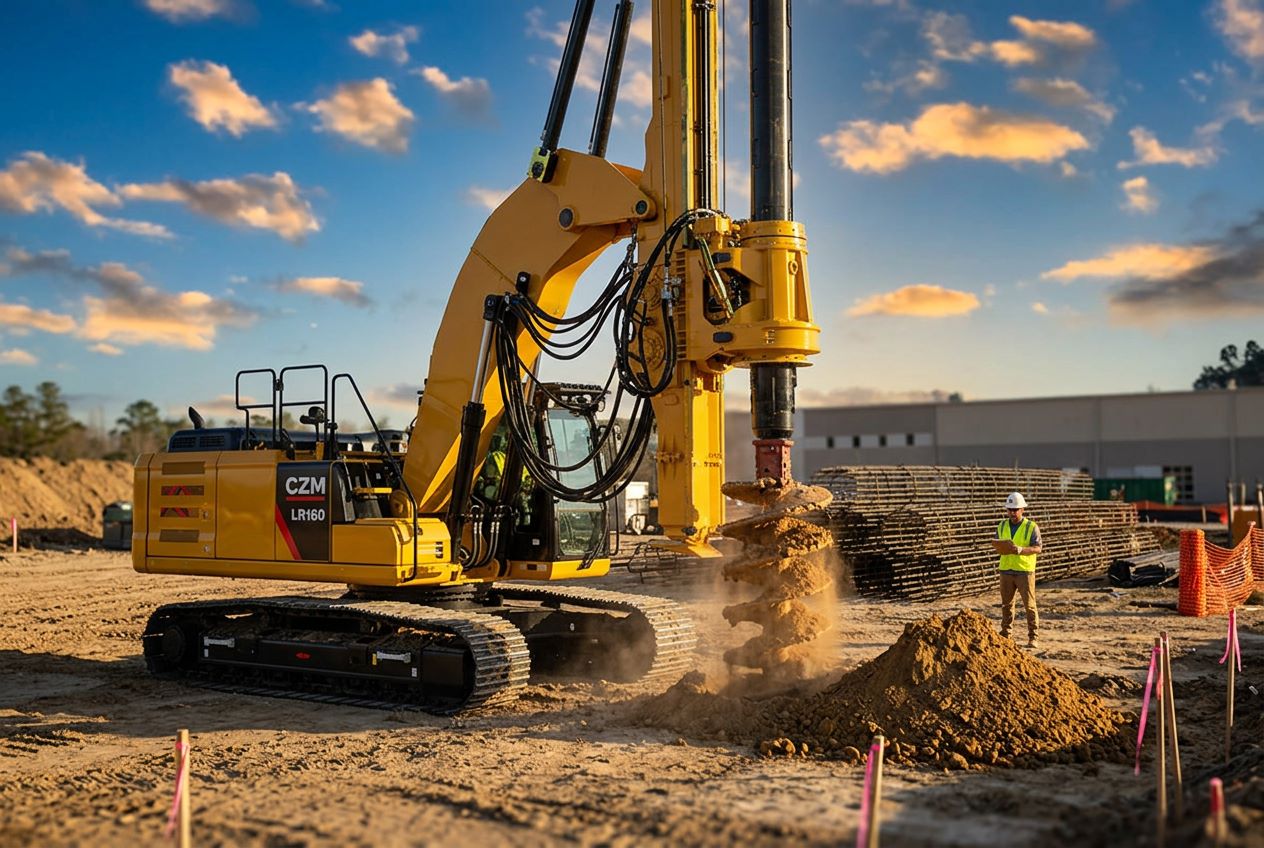
Choosing the right kind of drill rig is the most critical decision an operator can make. Get it right, and you have a versatile asset that can move from one high-demand sector to another, keeping crews busy and cash flow steady. Get it wrong, and you’re stuck with a machine that’s a poor fit for the work available, a drain on the balance sheet, and a boat anchor in the yard. Our primary rig, the CZM LR160, wasn't a purchase of convenience. It was a deliberate choice, rooted in a clear-eyed analysis of where the big, multi-year commercial drilling opportunities are headed. The rebuild of the U.S. power grid, the explosion in AI-driven data center construction, the onshoring of semiconductor fabs—these aren't short-term trends. They are foundational economic shifts, and they all have one thing in common: they are built on deep foundations. Drilled shafts, specifically.
The Workhorse of the Grid and Data Boom
The LR160 is a purpose-built hydraulic rotary rig. Its job is to efficiently drill large-diameter shafts for deep foundations. Think of the massive concrete piers that support transmission towers carrying high-voltage lines across the country. Or the grids of drilled shafts that form the structural foundation for a hyperscale data center, a battery plant, or a modern manufacturing facility. These projects often require shafts in the 36-inch to 72-inch diameter range, drilled to depths of 40 to 80 feet or more, often through challenging soil, rock, or both. This is the LR160’s sweet spot.
Its power and precision allow it to handle a wide range of geological conditions. In the unconsolidated soils common in many coastal or river valley areas, the rig can spin an earth auger to excavate material quickly. When it encounters hard rock, the crew can switch to a rock auger or a core barrel to grind through the formation and create a rock socket. This ability to adapt on-site is crucial. A single project might involve drilling through layers of clay, sand, and then solid bedrock. A less capable rig would struggle, leading to delays and cost overruns. The LR160’s combination of high torque and significant crowd force allows our crews to power through these mixed-geology profiles productively.
This versatility is key to our business model. The same machine that spent last month drilling foundations for a new substation in West Texas can be mobilized to a data center project in Ohio the next. We aren’t limited to a single niche. The demand drivers for grid modernization and data infrastructure are massive and geographically dispersed. The LR160 gives us the operational flexibility to go where the work is, rather than waiting for the right kind of work to appear in our backyard.
Under the Hood: Torque, Crowd, and a CAT C13
To a layman, a drill rig is just a big machine that spins a bit. To an operator, it’s a finely tuned instrument. Two key performance metrics are torque and crowd force. Torque is the rotational power the rig can apply to the tooling. The LR160 delivers a maximum of 162,260 foot-pounds of torque. This is the raw power that allows it to turn large-diameter augers through dense soil or rock. Insufficient torque means the tool will bind up, stopping progress.
Crowd force is the downward pressure the rig can exert on the tool string. The LR160 has a maximum crowd of 42,710 pounds. This is what helps the auger or core barrel bite into the material and advance the borehole. The interplay between torque and crowd is like the relationship between a powerful engine and good tires on a truck. You need both to get traction and move forward efficiently. The operator is constantly adjusting the balance based on the feel and sound of the drilling, responding to the conditions downhole.
Powering this system is a Caterpillar C13 diesel engine, rated at 440 horsepower. The choice of a CAT engine is no accident. CAT power plants are legendary in the heavy equipment world for their reliability and serviceability. When you are on a tight schedule, an engine failure can be catastrophic. Having a powerplant with a global parts and service network like Caterpillar’s provides a critical layer of operational insurance. It’s also an engine that our mechanics and operators know inside and out, reducing troubleshooting time and maximizing uptime.
More Than Just the Rig: A System at Work
A drill rig never works in isolation. It’s the centerpiece of a carefully orchestrated system of support equipment and skilled personnel. Trying to run a project with just a rig is like trying to build a house with only a saw. It doesn’t work. The LR160 is supported by a dedicated fleet of machines that handle the other critical tasks on site.
Every time the auger comes out of the hole full of spoil, that material needs to be managed. Our Cat 308 excavator, equipped with a hydraulic thumb, swings in to clear the spoil from the drill rig's working area and either load it into a truck for removal or place it in a designated stockpile. Without an excavator of the right size and capability, the rig would quickly get bogged down in its own cuttings, killing productivity.
Simultaneously, our Cat 299D3 XE track loader is busy. It might be moving rebar cages into position for the crane to lift, hauling away excess spoil, or grading the access path for the concrete trucks. The track loader is the versatile utility player on the site, handling a dozen different tasks that keep the primary operation moving forward. For lifting and placing materials like rebar cages or setting tooling, the JLG 2733 telehandler provides the necessary reach and capacity.
Finally, none of it happens without the right trucks. Our Ford F-450 work trucks are the mobile command centers and tool carriers for our crews. They get our people and their essential gear to the site, no matter how remote. This entire support fleet isn’t an afterthought; it’s an integrated part of the drilling package we provide.
The Logistics of the Move: From Job to Job
The LR160 is a big machine, weighing in at over 100,000 pounds. Moving it from one project to the next is a major logistical undertaking. This is where our Western Star 49X semi tractors come in. These are heavy-haul tractors, specified to handle the demands of moving oversized and overweight equipment.
Depending on the move, we’ll pair the tractor with either a drop-deck or a lowboy trailer. A lowboy sits closer to the ground, which is necessary for clearing overpasses and power lines when hauling a tall machine like the LR160. The process is a ballet of planning and execution. Permits must be secured for every state, county, and sometimes city the rig will travel through. Routes have to be carefully planned to avoid bridges with insufficient weight ratings or tight turns the truck and trailer can’t make.
A single move can take days and cost thousands of dollars in permits, escort vehicles, and fuel. This is a significant factor in project bidding and scheduling. Efficiently managing mobilization and demobilization is a source of competitive advantage. An operator who can’t get their rig to the starting line on time is already behind. That’s why we run our own transport. It gives us control over the schedule and ensures our flagship asset is moved by professionals who understand the unique challenges of hauling heavy construction machinery.
The Economics of Iron: Uptime, Maintenance, and Asset Value
A new rig like the LR160 is a significant capital investment. But the purchase price is just the beginning of the story. The true cost of ownership is a function of its productivity, its operating costs, and its long-term value retention. This is where a culture of meticulous maintenance pays dividends.
Every hour the rig is down for an unscheduled repair is an hour it’s not earning revenue. That’s why our maintenance program is proactive, not reactive. We follow the manufacturer’s recommended service intervals to the letter, and we conduct daily inspections to catch small problems before they become big ones. Greasing joints, checking hydraulic fluid levels, inspecting teeth on an auger—these are the small disciplines that prevent catastrophic failures.
Well-maintained, high-quality equipment also holds its value. The secondary market for drill rigs is robust. When the time comes to cycle a rig out of our fleet, a machine with a clean bill of health and detailed service records will command a much higher price than one that’s been run hard and put away wet. We view our fleet not as a collection of depreciating assets, but as a portfolio of productive, valuable iron. The CZM rig, being built on a Caterpillar base, benefits from the same value retention seen in CAT’s own branded equipment.
In the Field: A Day in the Life of a Shaft
It all comes together on the job site. A typical drilled shaft installation starts well before the rig arrives. The site has been surveyed, and the center point of each shaft staked out. Underground utilities have been located and marked. The first task for the crew is to position the rig precisely over the stake. The operator uses the rig’s tracks to make fine adjustments, directed by a spotter on the ground. Once in position, the operator lowers the kelly bar—the telescoping shaft that transmits torque to the tool—and begins the dig.
As the auger spins, the operator monitors the hydraulic pressure gauges and listens to the sounds of the machine. An experienced operator can tell a lot about the ground conditions from the way the rig is performing. A change in the whine of the hydraulics might signal a transition from soft clay to a harder shale. A chatter in the kelly bar could indicate an encounter with a boulder.
After a few feet of progress, the operator lifts the auger, heavy with spoil, from the hole. The excavator moves in, and the rig operator spins the auger to fling the cuttings into a pile. The process repeats, section by section, until the design depth is reached. If rock is encountered, the crew may switch to a core barrel, a slower but more effective tool for hard formations. Once the hole is clean and at depth, the rebar cage is lowered in, and the concrete trucks arrive to fill the shaft. It's a methodical, repetitive, and demanding process that requires skill, teamwork, and reliable machinery.
Choosing the primary rig is one of the most important decisions a commercial drilling operator makes. It shapes the projects the crew can bid, the schedule they can hit, and the margins they can earn. Our anchor asset — the CZM LR160 — was chosen deliberately.
What the LR160 does well
The LR160 is a large hydraulic rotary rig purpose-built for drilled shafts and rock socketing. Its torque and crowd force are well matched to the shaft diameters and depths that transmission tower foundations and data-center piers typically call for. In practice that means the same rig can move between utility work, industrial work, and data-center work without giving up productivity — a critical trait when demand is spiking across multiple sectors at once.
Why fleet composition matters
A rig on its own does not finish a hole. It needs a support excavator to handle spoil, a track loader to move material, a rebar cage delivered on time, and a semi to move the rig itself between jobs. That is why our fleet pairs the LR160 with a Caterpillar 308 excavator equipped with a hydraulic thumb, a Caterpillar 270XE tracked skid steer, a Western Star 49X day cab pulling a drop deck, and a fleet of Ford F-450 work trucks.
Built to last
Rigs like the LR160 are expensive and long-lived. When maintained well, they hold value in the secondary market and stay productive for many years. That longevity is one of the reasons a modern rotary rig anchors the fleet of any serious commercial drilling operator.
The LR160 is the tip of that spear.
Working in commercial drilling?
Reach out to a DrillingCrust representative to talk projects, partnerships, or the fleet.

A holding company operating across the U.S. commercial drilling industry. We invest capital, provide funding, and lease equipment to established operators building the foundations of modern American infrastructure.
Contact
© 2026 DrillingCrust Holdings LLC. All rights reserved.