Kelly Bars and Torque: The Mechanics That Make Big Shafts Possible
May 1, 2026 · 6 min read · By Thomas Charles
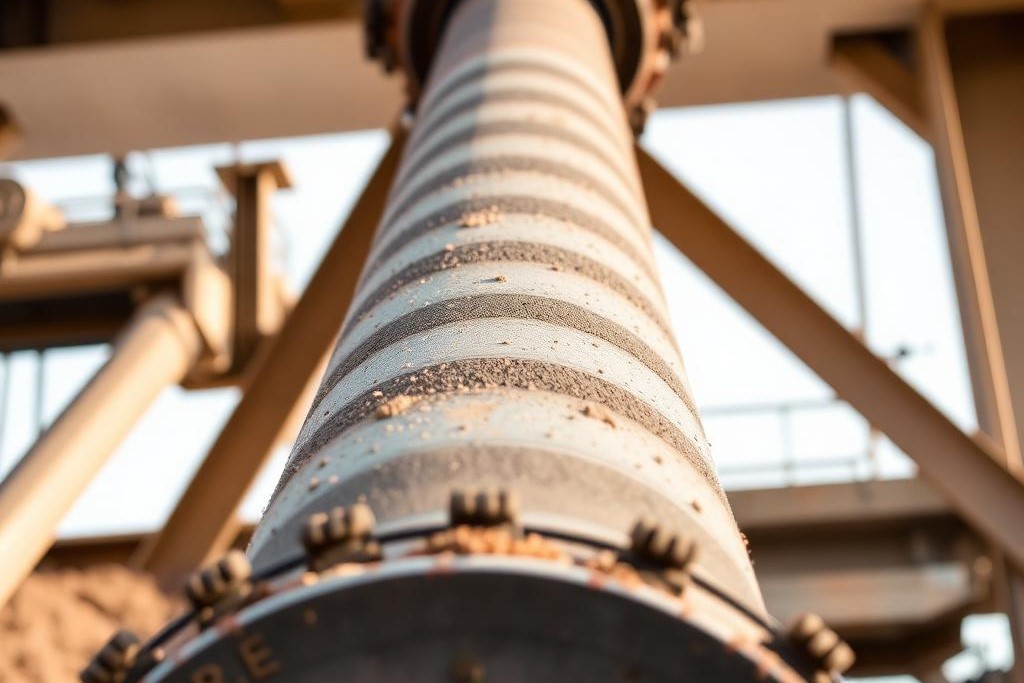
There’s a lot of focus on the big iron—the rig itself, the size of the auger, the horsepower of the prime mover. But the piece of equipment that truly dictates the capability of a drilled shaft operation is the kelly bar. It’s the critical link, the mechanical handshake between the rig’s power and the material being excavated hundreds of feet below. When you see a crew wrestling with a problematic hole, nine times out of ten the issue isn’t raw power; it’s about how that power is being delivered, or failing to be delivered, through that telescoping column of steel. The kelly bar isn’t just a component; it’s the heart of the drilling process, and understanding its function separates the profitable crews from the ones who burn through time and money.
Anatomy of a Workhorse
A kelly bar isn’t just a simple length of pipe. It’s a precision-engineered assembly of four or five nested, high-strength steel sections. The outer section, or female, connects to the rig’s rotary drive head. Each successive inner section is slightly smaller, allowing them to telescope out. The magic is in how they lock together to transmit immense rotational force. Along the length of each section are "drive rails"—longitudinal steel bars—that engage with corresponding slots in the next section. When the rotary head turns the outer bar, these rails engage, forcing the next bar to turn, and so on down to the tool.
The system is designed to lock under torque. The more resistance the tooling meets at the bottom of the hole, the tighter the drive rails engage. This is what allows a driller to apply the full torque of the rig, like the 215,000 foot-pounds our CZM LR160 can generate, down to a rock socket 150 feet deep. At the bottom of each section are locking pockets or pins. As the bar extends, these mechanisms engage with the top of the section below it, allowing the operator to apply "crowd"—the downward vertical force—which is just as important as torque for advancing the tool.
You will generally see two main types: interlocking and friction. An interlocking kelly bar uses drive rails and locking pockets to create a solid mechanical connection between each section. This design transmits the maximum amount of torque and is essential for drilling in hard rock or through difficult, mixed materials. A friction kelly bar relies on the friction between the flat outer surfaces of each section, which are forced against the inner surfaces of the next by the rotational force. These are lighter and faster to extend, making them suitable for softer soils and clays, but they can’t handle the torque required for serious rock work.
Translating Power to Ground
All the horsepower in the world is useless if it doesn’t reach the cutting teeth. The entire drilled shaft process is an exercise in managing the physics of force transmission. The rig—in our case, the CZM LR160—generates torque through its hydraulic rotary head. That force is transferred into the top of the outer kelly section. As the bar telescopes, section by section, it carries that torque down the expanding column. At the very bottom is the "kelly box," a square or hexagonal stub that the drilling tool—be it a dirt auger, rock auger, or core barrel—attaches to.
The amount of crowd force a driller can apply is limited by the weight of the rig, the kelly bar itself, and any auxiliary pull-down systems. On a rig like the LR160, the operator can apply up to 50,000 pounds of crowd force, pushing the tool into the formation. This is critical. Without sufficient crowd, a rock auger’s teeth will just skate across the surface of hard limestone or granite, polishing it instead of cutting it. The kelly bar has to be robust enough to handle these immense, simultaneous forces without buckling or deforming.
Consider a typical scenario: drilling a 48-inch diameter shaft for a transmission line foundation. The first 40 feet might be soft clays and sands. Here, the driller can extend the bar quickly, using a standard dirt auger and relying on the weight of the kelly and tool to advance. Then, the hole hits a hard limestone seam at 50 feet. The operator retracts the kelly, swaps to a rock auger with carbide "bullet" teeth, and begins applying serious crowd and torque. The kelly bar locks up tight, the drive rails groan under the strain, and the full power of the rig is finally brought to bear on the rock. This transition is where the design of the bar proves its worth.
Matching the Bar to the Bore
Choosing the right kelly bar is a strategic decision made long before the rig arrives on site. It’s a function of three main variables: target depth, required diameter, and anticipated geology. A deeper hole requires a longer bar with more telescoping sections. A larger diameter shaft, especially in hard material, demands a bar with a larger cross-section and more robust drive rails to handle the increased torque. An interlocking bar is the default choice for any job that anticipates hitting competent rock, boulders, or obstructional fill.
For example, the infrastructure projects we see driving the market—AI data centers, semiconductor plants, and substation hardening for the power grid—often demand large-diameter rock sockets. A project might call for 6-foot diameter shafts drilled 20 feet into solid granite. This requires a heavy-duty, 4- or 5-section interlocking bar paired with a powerful rig. Using a friction bar, or an undersized interlocking bar, would be a recipe for failure. The bar would either be unable to transmit the necessary torque, or worse, it would fail catastrophically under the load.
This decision framework extends to the fleet. At DrillingCrust, we don’t just supply capital; we ensure our operating companies have the right tools for the job. Our investment in the CZM LR160 was driven by its balance of torque and mast height, which allows it to run the long, heavy kelly bars needed for the deep foundation work that is in high demand. Having a smaller rig that can only handle a 3-section friction bar limits an operator to shallow, soft-soil jobs, effectively capping their revenue potential.
The Physics of Failure
Even the best equipment has its limits, and a kelly bar is subject to some brutal physics. One of the most common and dangerous failure modes is "kelly whip." When a long, extended bar is rotated at high speed, it can begin to oscillate or wobble. This eccentric movement creates immense side-loading on the bar, the rotary head, and the rig’s mast. It can lead to metal fatigue, bent sections, and in a worst-case scenario, a complete fracture of the bar, sending thousands of pounds of steel flying.
Experienced drillers know how to manage this. They control the rotational speed (RPMs) based on the depth and stiffness of the bar. They also pay close attention to the centering of the tool at the start of the hole. An off-center start guarantees oscillation. Another pitfall is drilling in mixed ground with shifting layers of hard and soft material. When an auger breaks through a rock layer into a soft void, the sudden release of torque can cause the bar to jump, potentially damaging the drive rails or lock mechanisms.
Managing these risks is about feel and experience. A good driller can feel the subtle changes in vibration coming up the kelly bar, telling them whether the teeth are cutting efficiently or bouncing off rock. They listen to the strain on the engine and hydraulics. They monitor the spoil coming out of the hole to understand the geology they’re in. It’s a constant feedback loop between the operator, the machine, and the ground, all communicated through that column of steel.
Ripple Effects on Cost and Schedule
The performance of the kelly bar directly dictates the pace of the entire job site. A slow penetration rate doesn’t just affect the driller; it creates a cascade of costly delays. While the rig is struggling to advance the hole, our Cat 308 excavator sits idle, waiting to clear spoils. The concrete trucks, scheduled for a specific pour time, get pushed back. The JLG telehandler, meant to set the rebar cage, is stalled. Labor costs mount for every hour the crew is on site but not making hole.
Think about the cost mechanics. A typical drilled shaft crew might have a daily burn rate of thousands of dollars in labor, fuel, and equipment costs. If a kelly bar issue—say, a damaged lock that won’t engage—cuts the drilling rate from 30 feet per hour to 10, the time to complete a single 120-foot shaft balloons from four hours to twelve. That single component’s failure can turn a profitable one-day shaft into a break-even (or losing) two-day affair. Now multiply that across a project with 50 or 100 shafts.
This is why fleet planning and maintenance are not back-office functions; they are core to operational success. When we lease a rig package to an operating company, it includes the support equipment—the Cat 299D3 track loader to move tooling, the Ford F-450 service truck with welders and spares, and the Western Star tractor to haul it all. The entire system is designed to maximize the productivity of the drill rig. If the kelly bar isn’t turning, the whole multi-million dollar asset package is effectively dead in the water.
Wear, Tear, and the Bottom Line
Kelly bars are consumable items. They operate in a high-stress, high-abrasion environment. The drive rails wear down, the locking pockets become rounded, and the steel sections themselves can become fatigued or bent over time. A rigorous inspection and maintenance program is non-negotiable. Before every shift, the operator should perform a visual inspection, looking for cracks, excessive wear on the rails, or damage to the kelly box.
Neglect is expensive. Running a worn kelly bar not only slows down the operation but also puts excessive strain on the rig’s rotary drive head, which is a far more costly component to repair or replace. A drive rail that is worn by just a quarter of an inch can introduce enough slop into the system to cause chattering and shock-loading, which travels right up into the rig’s most expensive hydraulic components. Eventually, a worn-out bar will simply fail to transmit torque, spinning uselessly inside its outer section.
The end of life for a kelly bar is a financial calculation. At some point, the loss of efficiency and the risk of failure outweigh the cost of a rebuild or replacement, which can be a significant capital expense. This is another area where DrillingCrust’s model provides value. We handle the long-term capital planning, ensuring our operating partners have well-maintained equipment without having to front the enormous cost of a new kelly bar or a full rig overhaul. It allows the operators to focus on what they do best: safely and efficiently drilling holes.
If you spend any time around a large hydraulic rotary rig, you quickly notice the piece of iron doing the most obvious work: the kelly bar. It is the long, telescoping steel column that transmits torque and crowd force from the rotary head down to the tooling at the bottom of the hole.
Why kelly design matters
A modern kelly bar is not a simple pipe. It is a set of nested steel sections engineered to slide inside each other, lock together under torque, and extend the reach of a single rig to depths that would otherwise require a much larger machine. That telescoping design is what allows a rig to drill 100 feet, 150 feet, and deeper on the same setup.
Torque, crowd, and rock
Two numbers define what a rig can do at depth: torque, which turns the tooling, and crowd force, which pushes it into the material. When either falls off, penetration rates drop and the crew loses money by the hour. That is why crews match tooling carefully to the geology and monitor performance shaft by shaft.
The link to fleet strategy
Kelly bar capacity ties directly to the rig platform. Choosing a modern rotary rig — one with the torque, crowd, and mast height to match the work coming down the pipeline — is one of the highest-leverage decisions a commercial drilling operator makes.
Working in commercial drilling?
Reach out to a DrillingCrust representative to talk projects, partnerships, or the fleet.
A holding company operating across the U.S. commercial drilling industry. We invest capital, provide funding, and lease equipment to established operators building the foundations of modern American infrastructure.
Contact
© 2026 DrillingCrust Holdings LLC. All rights reserved.