
Lowboy vs. Drop Deck: Getting Heavy Iron to the Jobsite
February 13, 2026 · 6 min read · By Thomas Charles
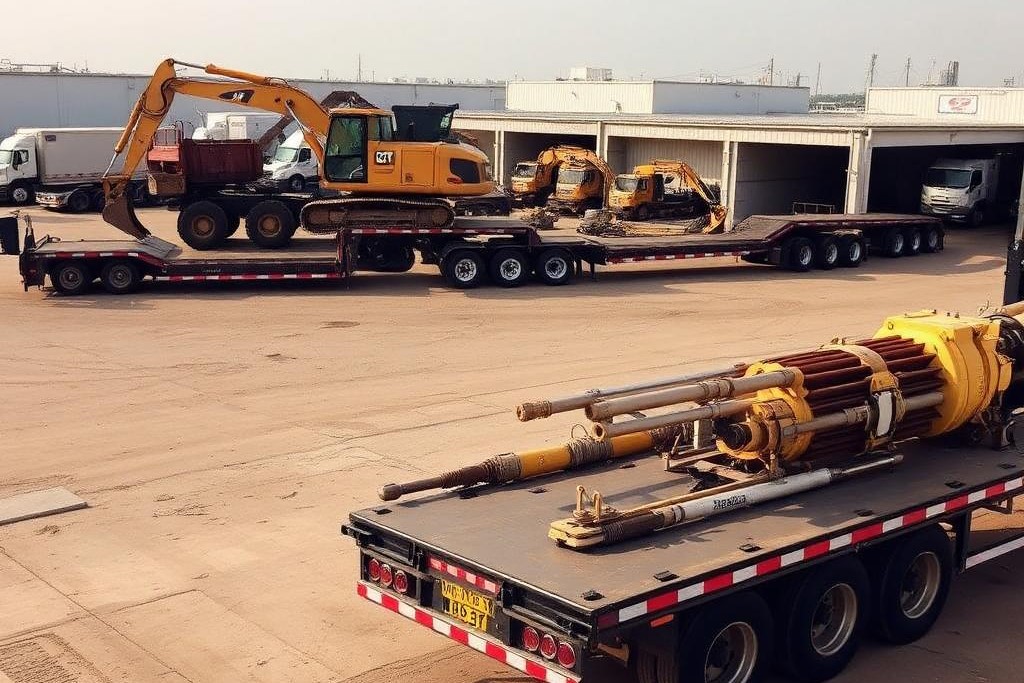
There are a thousand ways to lose a day on a drilling project. A rebar cage gets hung up in delivery. A key weld fails on a piece of tooling. The mix design for the high-strength grout is off. But one of the most common, and most preventable, sources of delay happens before the first hole is ever spudded: getting the iron to the jobsite. Transport isn't a footnote; it's a foundational discipline. The decisions you make about how to move a rig, an excavator, or even just a load of casing can dictate whether you hit your critical path milestones or spend your contingency days before the real work even begins. For operators in the commercial drilling world, mastering the logistics of heavy hauling isn't just about efficiency. It's about survival.
Lowboy, Drop Deck, or Flatbed? The Right Tool for the Job
The first question on any mobilization plan is matching the load to the trailer. This isn't a matter of preference; it's a physics problem governed by state and federal regulations. The core of the decision comes down to three variables: the height, weight, and length of the load. An over-height load can turn a simple ten-mile trip into a 100-mile odyssey of rerouting to avoid low bridges. An overweight load brings a hornet's nest of permits, escorts, and added costs. The wrong choice doesn't just waste time; it invites DOT fines and can put your operating authority at risk.
A seasoned logistics manager has the specs of every piece of equipment memorized. They know the transport weight and dimensions of a Cat 308 excavator versus a JLG 2733 telehandler. They know that while a machine's operating weight is what matters for performance, its transport weight and configuration are what matter for getting it to the site legally and safely. This isn't guesswork. It's a rigorous process of checking manufacturer spec sheets, measuring the load, and plotting it against the capabilities of the available trailers.
The choice between a lowboy and a drop deck is the most frequent decision point. A lowboy, with its sunken main deck, is the default for anything tall. A drop deck offers a longer, more continuous platform for mixed loads of tooling, materials, and smaller equipment. Understanding the trade-offs between them—and knowing when a simple flatbed will suffice—is a skill that separates the pros from the amateurs.
The Lowboy Gooseneck: Your Best Friend for Big Iron
When it comes to moving our primary production assets, the lowboy is the only serious option. Consider our CZM LR160 hydraulic rotary rig. In its transport configuration, it’s a dense, tall piece of machinery. Putting it on anything other than a lowboy would push it well over the typical 13-foot, 6-inch legal height limit in most states. A detachable gooseneck lowboy, sometimes called an RGN (Removable Gooseneck), is the gold standard here. The gooseneck disconnects from the trailer, drops to the ground, and creates a ramp. This allows us to simply drive the tracked rig or a large excavator directly onto the deck. It eliminates the need for crane loading or precarious ramp setups, dramatically improving safety and speed.
The mechanics of this are critical. On a crowded data center site or a tight power substation footprint, there often isn’t space to stage a crane or build out a loading ramp. The ability to drive on and drive off is not a luxury; it’s a necessity. It means a single operator can get a Cat 308 excavator unloaded and ready to work in under an hour, rather than waiting half a day for a rigging crew. This process minimizes risk to the equipment and, more importantly, to the personnel on the ground. A machine crawling up steep ramps is one of the most common sources of loading accidents.
Our fleet relies on lowboys for every heavy equipment move—the rig itself, the excavators, and our Cat 299D3 XE track loaders. The value is in the ground clearance. By sinking the load down between the wheels, a lowboy might gain you 18 to 24 inches of overhead clearance. That can be the difference between a direct route and a day-long detour. When you're billing a full drill crew and support staff, that single day of saved travel time can be worth tens of thousands of dollars in productive, revenue-generating work.
Drop Decks and Floats: The Unsung Heroes
If the lowboy is the specialist for heavy iron, the drop deck is the versatile workhorse. A typical 48 or 53-foot drop deck (or "step deck") gives you two deck levels: a shorter, higher front deck over the fifth wheel and a longer, lower main deck. This design makes it ideal for mixed loads that are less sensitive to height but still benefit from a lower center of gravity. We use them for hauling everything from drill tooling and augers to baskets of Grade B rebar cages for our drilled shafts.
A great example is mobilizing for a rock socketing job. We can load a full complement of rock augers, a core barrel, and miscellaneous drilling buckets on the main deck. The upper deck is perfect for pallets of polymer drilling fluid, spare parts, and the crew’s gear. This ability to consolidate what would otherwise be two or three separate flatbed loads into a single shipment is a major efficiency win. It means one truck, one driver, and one trip to get a site ready for production.
Drop decks are also our go-to for moving support equipment that doesn’t have the height profile of an excavator. Our JLG 2733 telehandlers, while heavy, can typically ride on a drop deck without issue. The lower deck makes for a safer, more stable ride than a standard flatbed. Loading is fast—drive it on from a loading dock or use a set of ramps—and tie-down is straightforward. In an industry where minutes matter, the ability to get a telehandler or a load of casing on the road in under an hour provides a huge operational advantage.
The Hidden Costs of Getting It Wrong
Choosing the wrong trailer is a costly mistake that ripples across a project. The most obvious cost is a citation from the highway patrol for being over-height or overweight, which can run into thousands of dollars and delay the shipment for hours or even days. But the financial pain rarely stops there. An overloaded trailer puts undue stress on its frame, axles, and tires, leading to premature wear and a higher likelihood of a catastrophic failure on the road. A blown tire or a cracked weld on a trailer can leave a multi-million dollar piece of equipment stranded on the shoulder of a highway, racking up costs for mobile repair crews and delaying the start of a project.
The operational costs are even more significant. Let’s say you tried to save a few bucks by putting a small excavator on a standard flatbed instead of a drop deck to get it under a specific bridge. You miscalculate the height by three inches. The resulting impact doesn't just damage the excavator; it can require a structural inspection of the bridge, shutting down a key transport artery for hours. The drilling operator is now on the hook for not only the equipment repair but potentially the costs of the inspection and the public disruption.
These are the kinds of unforced errors that can destroy a project’s profitability. A superintendent who has to tell a client that the rig will be a day late because the carrier sent the wrong trailer has lost credibility. It signals a lack of control and attention to detail. This is why experienced operators obsess over logistics. They know that the money saved by cutting corners on transport is imaginary—it will be paid back tenfold in delays, repairs, and reputational damage.
Owning the Fleet: Control, Flexibility, and Maintenance
For a drilling company focused on high-stakes infrastructure projects—power grid upgrades, data centers, semiconductor fabs—relying solely on third-party transport is a strategic liability. While hired trucks are a necessary part of managing peak demand, an owned fleet of tractors and trailers provides a baseline of control that is indispensable. When a client calls at 4 PM on a Friday and needs a piece of equipment moved to a different site by Monday morning, you can’t afford to be at the mercy of a dispatcher’s schedule. Having your own Western Star 49X semi-tractor fueled up and ready to hook onto the right trailer is what makes that kind of rapid response possible.
The decision to own is a significant capital commitment. It's not just the cost of the trucks and trailers, but the ongoing expense of maintenance, insurance, and employing qualified drivers. However, we view it as a critical investment in operational readiness. Our Ford F-450 work trucks can haul smaller gooseneck trailers for tooling and supplies, while the big Western Star tractors handle the heavy iron. This gives us the ability to move multiple loads concurrently and to prioritize our own projects without having to compete for capacity in a tight freight market.
Owning the asset also means controlling its maintenance. We know the service history of every trailer, every tire, and every tie-down strap. This isn't just about preventing breakdowns; it’s about safety and compliance. A well-maintained trailer is a safe trailer. When our driver hooks up to a lowboy, he knows the brakes have been checked, the lights are working, and the deck is sound. This confidence in the equipment is essential for keeping our crews, our machinery, and the public safe.
Routing, Permits, and Escorts: The Paperwork Battle
Getting the right trailer is only half the battle. The other half is fought on paper. Every state has a different set of rules for oversize and overweight loads. A load that is perfectly legal in one state might require a permit, a certified escort vehicle, or be restricted to travel only during specific hours just a few miles down the road after crossing a state line. Navigating this patchwork of regulations is a full-time job. For a rig move that crosses three states, our logistics team might have to coordinate with three different state DOTs to secure the necessary permits.
This process starts weeks in advance. The route has to be surveyed, not just on a map but often with a pilot car physically driving it to check for unexpected obstacles like new construction, low-hanging utility lines, or temporary weight restrictions on local roads. The permit application itself is a detailed document that specifies the exact dimensions and weight of the load, the truck and trailer configuration, and the proposed route. Any deviation can void the permit.
For extremely heavy or wide loads, one or even two escort vehicles may be required. These escorts, equipped with flags, lights, and height poles, are the eyes and ears of the truck driver. They provide a buffer in traffic, warn of upcoming hazards, and ensure the truck can safely navigate tight turns and intersections. The coordination between the truck driver and the escort drivers is a practiced skill. It’s a constant stream of communication over the radio, calling out clearances, and managing traffic. It’s a slow, deliberate, and expensive process, but it's the only way to move the largest components of our drilling fleet.
The Last Mile is the Toughest Mile
Ultimately, the trailers and the trucks are just tools. It’s the experience of the people managing them that makes the difference. A good logistics manager knows which states are the most difficult to permit. A good driver knows how to chain down a track loader for maximum stability. A good superintendent knows to have the laydown yard prepped and clear before the lowboy ever arrives on site. It’s this deep, field-earned knowledge that turns a piece of steel with wheels into a competitive advantage.
On paper, drilling is about boring holes in the ground. In practice, it’s a logistics business. It’s about getting the right people and the right equipment to the right place at the right time, ready to work. The choice between a lowboy and a drop deck might seem like a small detail, but it’s one of a thousand details that, taken together, determine whether a project succeeds or fails. In our world, the work doesn't begin when the auger starts to turn. It begins when the truck is safely loaded, chained down, and pulling out of the yard.
Ask a drilling superintendent what really makes or breaks a schedule, and equipment transport ends up near the top of the list. Choosing the right trailer for the right load is one of those quiet disciplines that experienced operators take seriously.
When a lowboy is the right call
Hydraulic lowboy trailers are designed for tall, heavy machines — excavators, track loaders, and rig components that need to sit close to the ground for legal transport height. A detachable gooseneck lets crews load and unload without ramps, saving time and reducing risk on tight jobsites.
When a drop deck earns its keep
Drop deck flatbeds are the workhorse for tooling, casing, rebar cages, and equipment that does not exceed height limits. They load quickly, tie down easily, and turn around fast between sites.
Owning versus hiring
Owning at least a core set of trailers gives a drilling operator control over schedule. Hired transport is fine for peaks, but the operator that can move its own iron at short notice keeps crews productive when project timelines shift.
Working in commercial drilling?
Reach out to a DrillingCrust representative to talk projects, partnerships, or the fleet.

A holding company operating across the U.S. commercial drilling industry. We invest capital, provide funding, and lease equipment to established operators building the foundations of modern American infrastructure.
Contact
© 2026 DrillingCrust Holdings LLC. All rights reserved.