
Mobilization Economics: Why Moving Iron Is a Line Item, Not a Detail
April 3, 2026 · 6 min read · By Thomas Charles
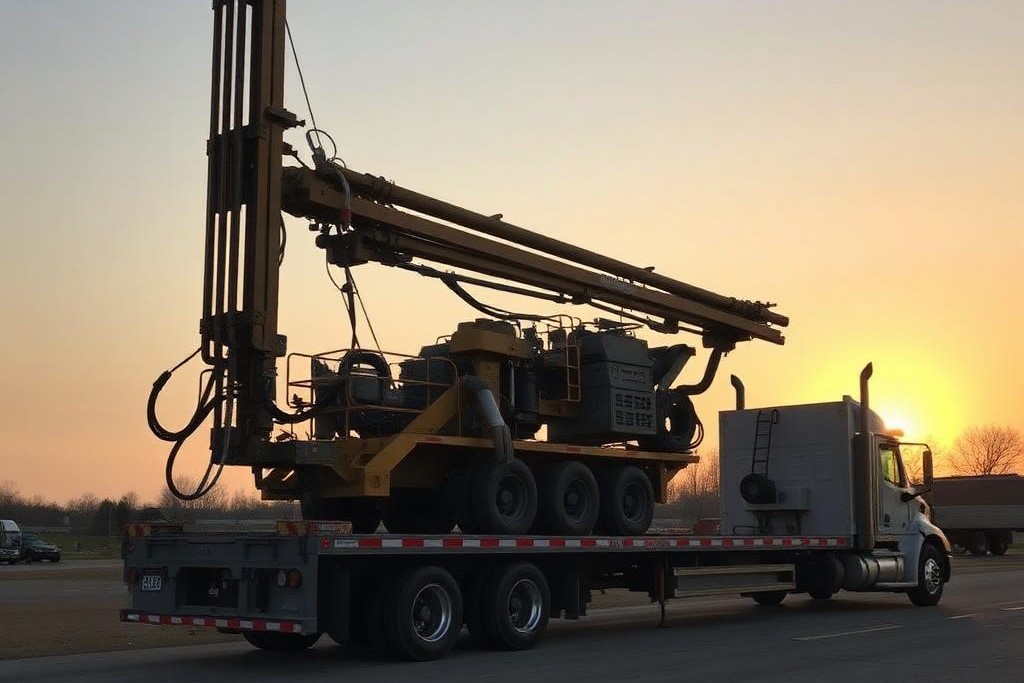
There’s a moment on every big drilling job, right before the first shaft goes in, that tells you a lot about the operator you’ve hired. It’s the point where the rig—in our case, a CZM LR160—is fully assembled, kelly bar vertical, ready to chew through whatever the ground throws at it. Getting to that moment of readiness is a job in itself, a costly and complex logistical exercise called mobilization. For the pros, it’s a science. For the amateurs, it’s where a project’s budget starts to bleed out before the real work has even begun. Managing the movement of heavy iron isn’t just a detail; it’s a core competency, and in the tight-margin world of commercial construction drilling, it’s often the difference between profit and loss.
The Five-Figure Question
Mobilization, or "mob" in jobsite shorthand, is the entire process of getting the drill rig and all its supporting gear from the yard or a previous job to the new site. Demobilization ("demob") is the same process in reverse. We’re not talking about a simple flatbed trip. A rig like the LR160, with an operating weight north of 110,000 pounds, is a heavy, oversized load. The permits alone can be a nightmare of paperwork, varying from state to state, county to county. You need specialized escort vehicles, or pilot cars, to run ahead and behind, warning traffic and ensuring the rig can clear bridges and power lines.
A single mob/demob cycle for one rig can easily run $20,000 to $30,000, and that’s just the direct cost of the truck, trailers, permits, and escorts. That figure doesn’t account for the operator’s crew. You have a team of skilled hands spending a full day on each end—tearing the rig down, loading it, then unloading and reassembling it. That’s two days of highly paid labor not drilling holes. If you’re renting the rig, the clock is ticking and you’re paying for it to sit on a trailer. Get the sequencing wrong on a multi-site project, or have a permit delayed, and those numbers can double.
Think about a project for a new transmission line with foundations needed at three separate locations, fifty miles apart. The inexperienced operator prices it as three distinct mob/demob cycles. The sharpshooter sees it as one continuous project. They plan a route that minimizes deadhead miles, pre-positions tooling at the second and third sites using a smaller truck, and leapfrogs support equipment. This isn’t just about saving a few bucks on diesel; it’s about saving days on the schedule and tens of thousands in non-productive costs.
Iron in Motion: A Logistical Chain
Moving a machine like a CZM LR160 isn’t like driving a car onto a trailer. The process is a careful, practiced disassembly. First, the tooling is removed—the auger, the rock bucket, whatever is specific to the job. Then comes the kelly bar, the series of telescoping steel tubes that drives the tool. On our LR160, this is a heavy, multi-section component that requires a crane or a powerful telehandler, like our JLG 2733, to lift and lay it onto a separate trailer. The rig’s mast is lowered, and sometimes the counterweights have to be removed to meet road weight limits.
The rig itself travels on a specialized lowboy trailer, designed to handle the immense weight and height. Our Western Star 49X tractors are the muscle here. These aren’t just any semi-trucks; they’re specced for heavy-haul, with powerful engines and robust drivetrains. The trailer is just as important. A drop-deck or lowboy is essential for clearing overhead obstacles. Once on site, the whole process happens in reverse. Everything must be reassembled with precision, fluids checked, and systems tested before drilling can begin. A crew that has done this a hundred times can get it done in a day. A green crew can turn it into a three-day ordeal, all while the general contractor is watching the clock.
This logistical chain extends to all the support equipment. The Cat 299D3 track loader used for site prep and cleanup needs its own transport. The Cat 308 excavator used for digging starter pits and managing spoils has to get there. Our Ford F-450 work trucks, loaded with tools, spare parts, and welding gear, are also part of the convoy. Each piece is a link in the chain, and a failure in any one of them—a flat tire on the lowboy, a mechanical issue with the work truck—can bring the entire operation to a halt.
Owning the Road: The Fleet Strategy
Many drilling companies outsource all their transportation. They finish a job, call a heavy-haul service, and wait their turn. This strategy sacrifices control for perceived simplicity. At DrillingCrust, we take a different view. We own the key transportation assets. Our Western Star 49X tractors aren’t just for show; they are a strategic advantage. By having our own trucks and specialized trailers, we control the schedule. When a client in the semiconductor fab space calls and says, "We need you on site a week early," we don’t have to check with a dozen dispatchers. We make it happen.
This approach allows our operating companies to be more responsive. Let’s say a major power grid project requires drilled shafts at multiple substation sites across a region. Owning the transport means we can move the rig overnight or on a weekend to hit the client’s window, avoiding impacts on their other site work. It gives us the flexibility to pull a rig from a slow-moving job and redirect it to a high-priority data center project where every day of delay costs the owner a fortune.
It’s also a matter of risk management. When you rely solely on third-party haulers, you’re subject to their availability, their insurance, and the quality of their drivers. A scheduling mistake on their end can cost you a week. A driver unfamiliar with hauling a top-heavy, six-figure piece of machinery can turn a routine move into a disaster. By keeping it in-house, our operating companies use drivers who understand the equipment because they are part of the same team. They know how to chain it down properly, how to navigate tricky site access, and how to communicate effectively with the drill crew.
The Ripple Effect: Second-Order Costs
A poorly executed mobilization has consequences that go far beyond the direct trucking invoice. The biggest impact is on labor productivity and project schedule. If the rig shows up late, your highly paid drill crew—the operator, the off-sider, the support laborers—are standing around, non-productive but on the clock. The general contractor’s schedule is built around key milestones, and the start of foundation drilling is one of the biggest. A two-day delay on our end can cascade, preventing the concrete crews from starting their work, which in turn holds up the steel erectors.
These delays have real financial teeth. Many commercial construction contracts include liquidated damages clauses, which are daily penalties the owner can assess for falling behind schedule. If your mobilization mistake costs the project a week, you might find yourself handing back a significant chunk of your contract value to the GC. This is why disciplined, predictable mobilization is a hallmark of a professional outfit. It reassures the client that you understand your role in the larger project ecosystem.
Conversely, a well-oiled mobilization can create opportunities. By getting on-site and set up a day or two early, you build goodwill and create a buffer in the schedule. If you hit an unexpected underground obstruction that takes an extra day to drill through, that buffer you created by being efficient on the front end means you can absorb the delay without impacting the project’s critical path. This is how you become a valued partner rather than just another subcontractor.
The Portfolio-Level Play
The most sophisticated operators don’t think about mobilization on a job-by-job basis. They look at their entire portfolio of current and upcoming work across a region. This is where DrillingCrust’s model of supporting our operating companies really shines. We can help them see the bigger picture. Instead of sending a rig from Dallas to Houston for one job, and then back to Dallas while another rig goes from Shreveport to Houston, we can sequence the work logically. The Dallas rig finishes its job, goes to Houston, and then tackles another nearby project that was in the pipeline.
This approach turns mobilization from a recurring cost into a strategic routing problem. It’s about minimizing empty miles and maximizing drilling days. For example, an operating company might have three projects in the same state: an EV battery plant in the north, a data center in the south, and a series of transmission line foundations in between. Instead of three separate round trips, they can plan a single, multi-month campaign, moving the rig, crew, and support gear logically from one site to the next. Shared resources, like a regional mechanic in an F-450, can support all three jobs more efficiently.
Pre-staging materials and tooling is another key tactic. If we know the next job requires a specific type of rock auger, we can send it ahead of time on a smaller, less expensive truck. When the big rig arrives, the tools it needs are already there, laid out and ready to go. This uncouples the complex logistics of moving the primary machine from the simpler logistics of moving its accessories. It’s a simple concept, but it requires foresight and a level of planning that many in the industry overlook.
When the Plan Breaks: The Human Factor
No amount of planning can prevent every problem. Axles break, tires blow, and site conditions are never exactly what the plans show. This is where the experience of the crew becomes the most critical asset. A veteran heavy-haul driver knows how to handle a blown tire on a lowboy without panicking. An experienced drill foreman knows how to improvise a solution when a hydraulic line gets damaged during unloading. It’s the calm, methodical problem-solving in the field that separates the pros from the pack.
This is why we invest in talent and continuity. A crew that has worked together for years, using the same set of equipment—our Cat excavators, our JLG telehandlers, our Western Star trucks—develops a non-verbal understanding. They know who does what during setup and breakdown. The telehandler operator anticipates where the drill operator needs the kelly bar placed. The ground hand has the right tools ready before he’s even asked. This silent efficiency is the result of thousands of hours of repetition, and it’s something you can’t buy or rent.
Common pitfalls often stem from a lack of this shared experience. A third-party truck driver might show up with the wrong trailer configuration. A green crew might reassemble the rig incorrectly, leading to a breakdown on the first day. The project manager might have failed to walk the access route, only to discover the lowboy can’t make the turn into the site. Mitigating these risks comes down to having people who have seen it all before and who take pride in flawless execution, from the moment the rig is chained down to the moment the first drill cutting comes out of the hole.
The Last Mile is the First Step
In the high-stakes world of commercial drilling that underpins America’s infrastructure renewal, the discipline of mobilization is not just an operational detail; it is a direct reflection of a company’s character and competence. It’s about foresight, control, and a deep understanding of the second- and third-order effects of every logistical decision. The ability to move a hundred thousand pounds of steel across three states efficiently and predictably is what allows our operating companies to be competitive. It’s what gives clients in critical sectors like data centers and power transmission the confidence that the job will be done right, on time, and on budget.
The growth in AI, semiconductor manufacturing, and the rebuilding of the power grid are creating unprecedented demand for specialized drilling services. The operators who thrive in this environment will be the ones who have mastered the entire process, not just the part that happens in the dirt. They understand that before you can generate value by drilling a hole, you have to master the art of getting the drill to the hole in the first place. For DrillingCrust and our operating partners, mastering that first step is the foundation of everything we do.
One of the least glamorous parts of a commercial drilling business is also one of the most economically important: moving the rig. A hydraulic rotary drill is a heavy, oversized load. Mobilizing it to a jobsite involves permits, escorts, dedicated trailers, and hours of setup on either side of the trip. Get it wrong, and the numbers on a project turn quickly.
The true cost of a move
A single mob and demob easily runs into five figures, and that is before crew time and equipment rental. For projects that span multiple sites in the same region, sequencing moves to minimize dead miles is real money.
Why fleet strategy matters
The Western Star day cab and drop deck trailer in our support fleet exist for exactly this reason. Owning the transportation, rather than always hiring it out, gives the operator control over schedule and cost — and lets crews respond quickly when a project asks for the rig sooner than expected.
Regional planning
The best drilling operators plan mobilization at the portfolio level, not the project level. Grouping work by region, sharing crews across nearby sites, and pre-staging tooling turns transportation from a cost into a competitive edge.
Working in commercial drilling?
Reach out to a DrillingCrust representative to talk projects, partnerships, or the fleet.

A holding company operating across the U.S. commercial drilling industry. We invest capital, provide funding, and lease equipment to established operators building the foundations of modern American infrastructure.
Contact
© 2026 DrillingCrust Holdings LLC. All rights reserved.