
Rock Socketing Fundamentals: Where Drilled Shafts Earn Their Capacity
May 15, 2026 · 7 min read · By Thomas Charles
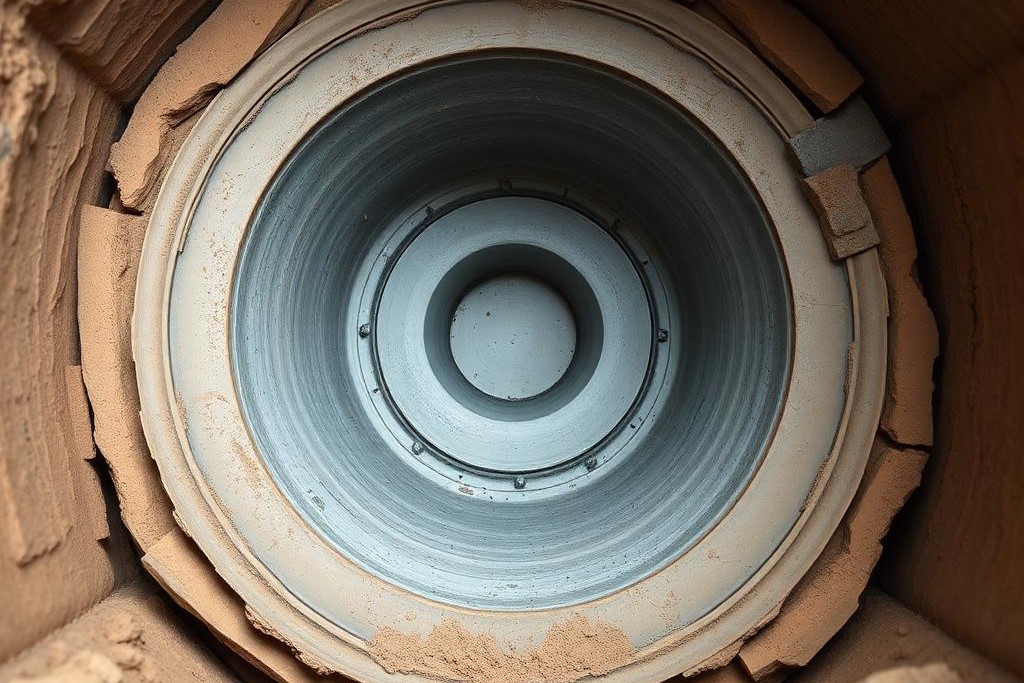
Ask a foundation driller where a deep foundation gets its load-bearing capacity, and you’ll get a straight answer: the rock socket. For the kind of high-stakes projects our equipment supports—power grid expansions, semiconductor plants, warehouse-sized data centers—the success of the entire structure often comes down to the last 10 to 40 feet of the hole. This is where the drilled shaft meets competent bedrock. The interaction between the concrete and the rock is what allows a three-foot-wide column of concrete to support millions of pounds of structural load. It’s not glamorous work, but it’s the bedrock of modern construction, literally.
The Real Workhorse of the Foundation World
A drilled shaft in soil alone is just a friction pile. It generates capacity by mobilizing the skin friction between the concrete and the surrounding soil. For lighter structures or in certain geotechnical profiles, that’s perfectly adequate. But the loads we’re seeing today for critical infrastructure are on another level entirely. A single transmission tower for a new high-voltage line or a column supporting a hyperscale data hall subjects its foundation to immense axial and lateral forces. Relying on soil friction alone would require shafts of impractical length and diameter, driving up cost and schedule.
This is where the rock socket comes in. It’s the portion of the shaft drilled directly into a competent rock formation. By keying the shaft into the rock, we’re no longer just relying on friction. We’re engaging the immense bearing capacity of the rock mass itself. The socket transfers the load into the rock through two mechanisms: side-wall shear (friction) and end bearing. The rougher the walls of the socket and the stronger the rock, the more side-wall shear it can generate. End bearing is simply the direct transfer of load from the base of the concrete shaft to the flattened bottom of the hole. Most of the time, engineering designs for high-capacity shafts rely primarily on that side-wall shear within the socket for their axial capacity.
Think of it like this: driving a smooth nail into a block of soft pine is one thing. Threading a coarse lag bolt into a block of solid oak is another. The lag bolt can support a hundred times the load, not just because the oak is harder, but because the threads (the rough walls of the socket) create a mechanical lock. That’s what a properly executed rock socket does. It mechanically locks the foundation into the earth’s strongest material.
From Soil to Stone: The Transition Zone
The process of creating a rock socket begins the moment the drill rig’s tooling meets refusal in the overburden. Until that point, the crew is typically using a soil auger to excavate clays, silts, and sands. Once the operator feels the bit grind against rock, the real work starts. This transition is a critical decision point. Is it actual bedrock, or just a nested boulder or a layer of weathered, marginal-quality rock? An experienced operator can often tell by the feel and sound of the rig.
Assuming we’ve hit the target formation, the tooling has to change. The soil auger comes out of the hole and a specialized rock tool goes in. The specific choice depends on the rock’s hardness and characteristics. For softer or fractured rock, a drag bit with carbide “bullet” teeth or a rock auger might be sufficient to grind the material away. For the hard, competent granite or limestone that provides the best capacity, we switch to a core barrel. A core barrel is essentially a thick-walled steel cylinder with tungsten carbide teeth mounted on its cutting edge. The barrel is rotated under immense crowd pressure from the rig, cutting a circular groove and creating a solid core of rock in its center.
Our CZM LR160 is built for this kind of work. It has the engine horsepower, hydraulic flow, and rotary torque to spin a core barrel through tough rock without bogging down. It also has the high crowd force—the ability to push the tooling downward—necessary to keep the teeth engaged and cutting effectively. After advancing the core barrel to the design depth of the socket, the barrel is extracted and the rock core inside is broken off and removed. The result is a clean, cylindrical socket with rough, grooved walls, perfect for creating a strong bond with the concrete.
Engineering Meets Geology: Designing for Capacity
The design of a rock socket is a collaboration between the structural engineer and the geotechnical engineer. The geotechnical investigation will determine the properties of the bedrock: its type, its compressive strength (measured in pounds per square inch or megapascals), and its Rock Quality Designation (RQD), which is a measure of how fractured the rock mass is. This data informs the design engineer how much load the rock can safely support.
A typical design might call for a socket of a certain diameter to be drilled to a certain length into rock with a minimum specified compressive strength. For example, a project might specify a 36-inch diameter shaft with a 15-foot socket in rock with an unconfined compressive strength of at least 2,000 psi. The design calculations will show that this geometry provides the required factor of safety against failure for the anticipated structural loads. For critical infrastructure, factors of safety are not a suggestion; they are a mandate.
The mechanics are straightforward. The axial load from the column above is transferred down the concrete shaft. As it enters the socketed portion, the load is shed into the rock via shear stress along the circumference of the shaft. Whatever load isn’t shed through side shear is transferred to the rock at the bottom of the shaft in end bearing. In high-capacity designs, engineers often assume that 70-80% of the load is carried by side shear and only 20-30% by end bearing. This conservative approach is why a clean, rough socket wall is so fundamentally important. It’s where the magic happens.
Jobsite Realities: Getting the Socket Right
A design on paper is only as good as its execution in the field. Creating a high-quality rock socket is a matter of discipline and having the right equipment. The first challenge is keeping the hole clean. As the rock tool grinds away, it creates cuttings and slurry that can contaminate the hole and compromise the concrete-to-rock bond. The hole must be periodically cleaned out with a clean-out bucket and, in some cases, flushed with water or polymer slurry to remove fine particles from the socket walls.
Second is verification. The crew has to prove they’ve reached rock of the specified quality and drilled to the required depth. The operator’s log, which tracks drilling progress and changes in formation, is the first piece of evidence. The rock cuttings brought up by the auger or core barrel are also visually inspected to confirm the geology matches the geotechnical report. On some jobs, the owner’s representative or a third-party inspector will be on-site to verify the rock quality before concrete placement is approved.
Finally, the base of the socket must be clean before the rebar cage is set. Any loose material or a "slurry cake" at the bottom of the hole will create a weak zone right at the point of end bearing. A clean-out bucket is used to ensure the base is flat and free of debris. In some critical applications, an inspector might even lower a camera down the hole for a final visual inspection. This level of rigor is what separates a professional crew from the rest. It’s what ensures the foundation will perform to its design capacity for the next 50 or 100 years.
When the Ground Fights Back: Unexpected Conditions
Geotechnical reports are excellent guides, but they are based on a limited number of test borings. The ground between those borings can always hold surprises. A crew might encounter a rock layer that is much harder or more fractured than anticipated. The rock might be steeply inclined, causing the tooling to "walk" or deflect. Or, you might punch through a hard layer into a void or a pocket of much softer material—a scenario that requires an immediate work stoppage and a conference with the engineers.
This is where experience and having the right iron pays off. An operator running a powerful rig like our LR160 has more tools in his toolbox. He can adjust the rotation speed, the crowd pressure, and the type of tooling to match the conditions. If a rock auger isn’t making progress in hard granite, he can switch to the core barrel. If a seam of soft rock compromises the socket wall, it might be necessary to drill deeper to develop the required socket length in more competent material.
These are the kinds of field decisions that can make or break a project’s budget and schedule. A less experienced crew with underpowered equipment might struggle for days, burning fuel and man-hours without making progress. A professional outfit with heavy-duty equipment like our Cat excavators and loaders for site support and a powerful rig at the hole can diagnose the problem, adapt the plan, and keep the project moving forward. It’s not about avoiding problems; it’s about solving them efficiently when they arise.
The Money and the Schedule: Why Sockets Save Both
While the process of drilling a rock socket requires specialized tooling and skilled operators, it almost always results in a more economical foundation than the alternatives. The ability to tap into the high capacity of bedrock means shafts can be shorter and often smaller in diameter. A design that might require a 90-foot friction pile in soil could perhaps be accomplished with a 40-foot shaft socketed 15 feet into rock.
This has significant cost implications. A shorter, smaller-diameter shaft requires less drilling time, which saves on labor and equipment rental. It requires a smaller volume of concrete, which is a major material cost. It also requires a smaller reinforcing steel cage, reducing steel tonnage and the labor needed to fabricate and place it. When you multiply these savings across a project with dozens or even hundreds of drilled shafts—like a solar farm or a data center campus—the total cost reduction can be substantial.
The schedule benefits are just as important. In the construction business, time is money. Finishing the foundation drilling ahead of schedule allows the follow-on trades—the steel erectors, the concrete crews, the electricians—to get started sooner. For a revenue-generating facility like a manufacturing plant or a data center, getting online even a week earlier can be worth millions of dollars to the owner. By optimizing the foundation design with rock sockets, we are helping to compress the overall project schedule and accelerate the owner’s return on their capital investment.
The Unseen Anchor of the Modern World
The next time you see a new transmission line crossing the horizon or drive past a massive new logistics center, think about what’s holding it all up. Buried deep in the ground, locked into bedrock, are hundreds of meticulously engineered and constructed rock sockets. They are the unseen, unsung heroes of the foundation world, the critical connection point between the steel and glass we see and the geological strength of the earth below.
This is not routine work. It requires a deep understanding of geology, a mastery of heavy equipment, and an unwavering commitment to quality control. Companies that self-perform this work need a fleet of reliable equipment, from the drill rig itself to the support machines—telehandlers, loaders, and trucks—that keep the operation running smoothly. Our business model at DrillingCrust is to provide the capital for operating companies to acquire and maintain this exact type of equipment. By leasing top-tier rigs like the CZM LR160 and the Cat machinery needed to support it, we empower drilling contractors to execute these demanding projects safely and efficiently. In the end, a successful rock socket is more than just a hole in the ground; it’s the anchor for the critical infrastructure that our economy depends on.
Ask a foundation engineer where a drilled shaft actually gets its capacity, and the answer is almost always the same: the rock socket. That final section of the hole — drilled several feet into competent bedrock — is what lets a relatively slender concrete column carry the enormous loads that modern infrastructure demands.
What a rock socket is
A rock socket is the portion of a drilled shaft that is advanced into bedrock, typically by switching from soil augers to rock tooling — core barrels, drag bits, and rock augers designed to grind through hard formations. The socket transfers axial and lateral load into the rock through a combination of side friction along its walls and end bearing at its base.
Why sockets matter for modern loads
Transmission towers, hyperscale data centers, and industrial equipment all impose concentrated loads that soft or intermediate soils cannot support on their own. A properly designed rock socket unlocks the capacity of the underlying rock — often dramatically shortening the required shaft length compared with a friction-only design.
Executing a clean socket
Socket quality is a jobsite discipline. Crews have to keep the walls clean, verify penetration into competent rock, and inspect the base before the rebar cage and concrete go in. Doing that well requires a rig with the torque and crowd force to run rock tooling and an operator who understands the geology under the tracks.
The takeaway
Rock sockets are not glamorous. But they are why drilled shafts are the foundation of choice for the infrastructure being built across the country — and why crews with the right iron and the right training stay in demand.
Working in commercial drilling?
Reach out to a DrillingCrust representative to talk projects, partnerships, or the fleet.

A holding company operating across the U.S. commercial drilling industry. We invest capital, provide funding, and lease equipment to established operators building the foundations of modern American infrastructure.
Contact
© 2026 DrillingCrust Holdings LLC. All rights reserved.