
Semiconductor Fabs: The Other Megaproject Driving Foundation Drilling
February 27, 2026 · 7 min read · By Thomas Charles
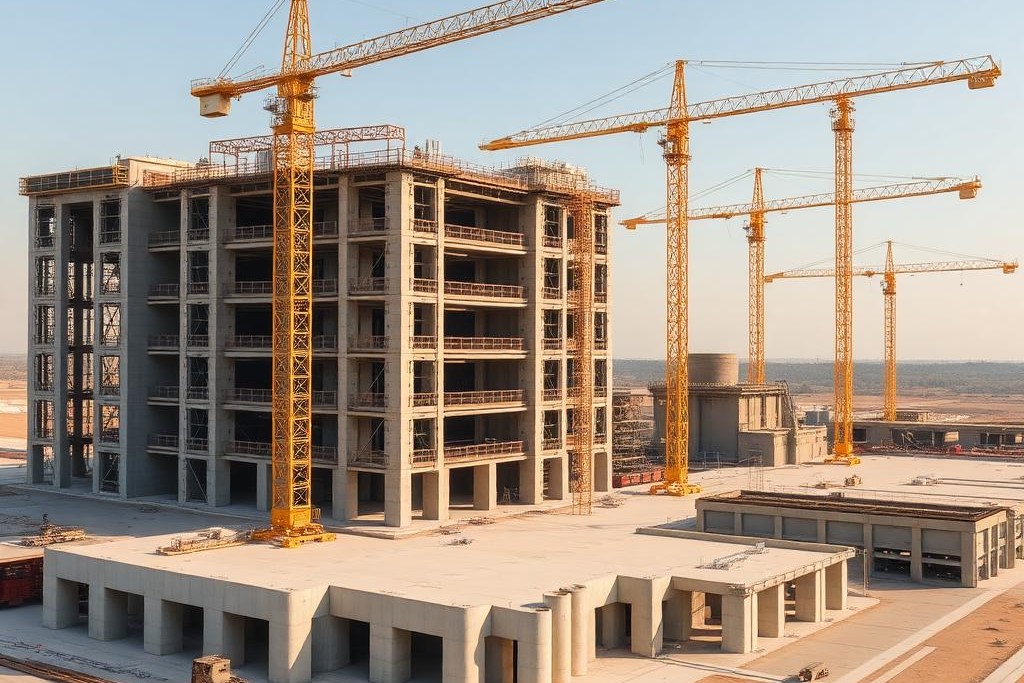
The industry conversation is dominated by data centers, and for good reason. The sheer velocity of their construction is putting unprecedented strain on regional power grids and, by extension, on the drilling contractors who build the foundations for new transmission lines and substations. But another, equally massive driver of work is quietly unfolding, often in the same geographic hotspots. The domestic semiconductor fabrication plant, or fab, is back. Fueled by a global chip shortage and new federal incentives, a wave of fab construction is hitting Arizona, Texas, Ohio, and New York, creating a demand for specialized foundation drilling that our industry hasn't seen in a generation. These aren’t just factories; they are multi-billion-dollar megaprojects where the foundation work is as complex and critical as any part of the build.
The Foundation-Heavy Nature of a Fab
Modern fabs are some of the most vibration-sensitive buildings on the planet. The photolithography process, where circuits are etched onto silicon wafers, involves precisions measured in nanometers. Even the slightest tremor from nearby traffic or mechanical equipment can ruin a multi-million-dollar batch of chips. This operational requirement dictates a foundation strategy built on absolute, uncompromising stability. It’s not about simply supporting the weight of the structure; it’s about creating a monolithic, vibration-damping mass deep in the earth.
This translates directly into an enormous volume of drilled shafts. Where a typical warehouse might have columns spaced 50 feet apart, a fab’s cleanroom and sub-fab levels require a dense grid of foundations to create a "waffle slab" or deep, stiffened grade beams. This substructure is designed to be so rigid that it moves as a single unit, isolating the delicate tools above from any ground-borne vibration. The result is a forest of piers—often thousands on a single project—extending deep into the ground, a scope of work that can dwarf even the largest commercial high-rise or industrial plant.
Furthermore, the tolerances are unforgiving. Pile location, cutoff elevations, and verticality (plumbness) must be exact. A deviation of an inch, acceptable on some jobs, can cause a cascade of problems for the superstructure and tool installation. This precision places a heavy burden on the drilling operator. It demands rigorous surveying, constant monitoring during drilling, and crews who understand that "close enough" is not in the vocabulary on a fab site.
Drilling Beyond the Building Pad
The drilling demand doesn’t stop at the fab’s main building. A modern semiconductor campus is a sprawling industrial complex. The main fab is supported by a host of ancillary buildings, each requiring its own robust foundation system. These include the Central Utility Building (CUB), which houses boilers, chillers, and compressors; water and wastewater treatment facilities; bulk chemical storage; and electrical substations dedicated to the campus.
Each of these support structures sits on a network of drilled shafts. Cooling towers are heavy and subject to wind loads, requiring deep foundations. The transformers and switchgear in a high-voltage substation weigh hundreds of tons and sit on piers designed to handle both the weight and the constant, low-level vibration from the equipment itself. The scale is immense; the dedicated power infrastructure for a single new fab can equal the consumption of a small city, triggering extensive work on and off the primary site.
This creates a ripple effect across the region. A new fab often requires a new transmission tie-in, meaning dozens of new foundations for steel monopoles stretching for miles. It might require an expanded municipal water treatment plant or a new pipeline, creating more opportunities for foundation work. For a drilling firm, a fab isn’t a single project; it’s the epicenter of a multi-year program of related work that puts a strain on equipment and manpower.
The Right Iron for the Job
You don’t win and execute a fab project with dated equipment. The schedules are too aggressive and the cost of downtime is too high. Success depends on having modern, reliable, and powerful machinery. A rig like the CZM LR160 is well-suited for this environment. It has the torque to drill large-diameter shafts and socket them into the hard bedrock often found at these sites, providing the solid anchor point these designs require.
The drilling process itself is a multi-step operation. On a typical Arizona or Texas site, our operating partners might start by augering through several dozen feet of soil and caliche. Once they hit competent rock, the work transitions. They’ll switch to a core barrel or rock auger to advance the shaft several more feet, creating a "socket" that locks the concrete pier to the bedrock. This is slow, hard drilling that tests the limits of the equipment and the skill of the operator.
But the drill rig is only one piece of the puzzle. The entire operation has to be supported by a fleet of other equipment. Spoil removal is a constant battle; a Cat 299D3 track loader is running all day, every day, just to keep the area around the rig clear so it can work and move. A Cat 308 excavator is indispensable for handling casing, moving rebar cages, and performing cleanup. The whole system has to function as a unit to maintain the high production rate these schedules demand.
Navigating the Crowded, Critical Path
Foundation drilling is always on the critical path of a construction schedule, but on a fab project, the scrutiny is magnified tenfold. The owner is spending tens of billions of dollars, and any delay in getting out of the ground ripples through the entire project, potentially costing millions per day. This puts enormous pressure on the driller to perform.
The job site itself is a major challenge. A fab site is not an orderly, sequential build. It’s a scene of controlled chaos, with earthwork, deep underground utility installation, and foundations happening simultaneously. Your drilling crew is working in close proximity to a dozen other trades. This creates a constant risk of logistical bottlenecks. Access roads get blocked. Laydown yards for casing and rebar are moved. The slurry and spoil disposal plan has to be coordinated with a dozen other contractors.
This is where experience pays dividends. A seasoned supervisor knows how to anticipate these conflicts and communicate with the general contractor’s team to keep the work flowing. They know they need their support equipment—the loaders and excavators—strategically positioned to react to changes on the site. A stuck truck or a misplaced spoil pile can bring a multi-million-dollar drill rig to a standstill. It’s this ground-level management of logistics, supported by versatile equipment like JLG telehandlers for moving materials and Ford F-450 work trucks for servicing machines, that separates the successful operators from the ones who get swallowed by the complexity.
What It Takes to Compete
Competing for and executing work on semiconductor fabs requires more than just bidding low. It requires a platform built on three pillars: modern equipment, skilled crews, and the financial stability to manage cash flow on massive, long-term projects. The capital investment is significant. A company can’t just show up with a single, aging rig and expect to keep pace.
This is the operational environment our business model is designed to support. DrillingCrust focuses on providing capital and leasing the high-performance assets—the CZM rigs, the Cat support equipment, the Western Star haul trucks—that allow our operating companies to meet these demanding project requirements. By ensuring they have access to a well-maintained, late-model fleet, we enable them to focus on execution, safety, and production.
Ultimately, fab work is a test of an operator’s entire system. It tests their machinery, their crews’ expertise in difficult geology, their supervisors’ ability to manage logistics on a crowded site, and the company’s ability to sustain operations over a months-long contract. Those who can meet this test are finding themselves with a backlog of some of the most challenging and rewarding work in the industry.
A Generational Opportunity
The buildout of domestic semiconductor manufacturing is not a short-term blip. It is a strategic, long-term realignment of global supply chains. The projects breaking ground today are just the first wave. More phases are already being planned, and the ecosystem of suppliers and support industries will continue to grow up around them.
For the U.S. commercial drilling industry, this represents a generational opportunity. It’s a chance to build the foundations for a new era of American manufacturing, driven by the same technologies our work will help create. Along with the ongoing rebuild of the power grid and the explosive growth of data centers, these fab projects are forging a new landscape for our industry. The operators who have the right equipment, the right people, and the right operational support will be the ones who rise to the challenge.
When people list the megaprojects reshaping American construction, data centers usually come up first. Semiconductor fabs deserve to be in the same sentence. The wave of new fabs being built across Arizona, Texas, Ohio, and New York is generating drilled foundation work at a scale the industry has not seen in a generation.
Why fabs are drilling-heavy
Modern semiconductor fabs are extraordinarily sensitive to vibration. That drives foundation designs with more piers, deeper embedments, and tighter tolerances than most industrial buildings. The utility yards, cooling infrastructure, and tool platforms all sit on drilled foundations too.
Compounding infrastructure demand
Each new fab also triggers a wave of off-site work — expanded substations, new transmission tie-ins, and often dedicated water infrastructure. All of that adds up to more drilled shafts, more rock sockets, and more schedule pressure on regional drilling capacity.
What operators need to compete
Fab work rewards operators with modern iron, experienced crews, and the fleet coverage to keep production tight. It is exactly the kind of work our platform is built for.
Working in commercial drilling?
Reach out to a DrillingCrust representative to talk projects, partnerships, or the fleet.

A holding company operating across the U.S. commercial drilling industry. We invest capital, provide funding, and lease equipment to established operators building the foundations of modern American infrastructure.
Contact
© 2026 DrillingCrust Holdings LLC. All rights reserved.