
Substation Foundations, Transmission Towers, and the Next Grid Buildout
July 10, 2026 · 8 min read · By Thomas Charles
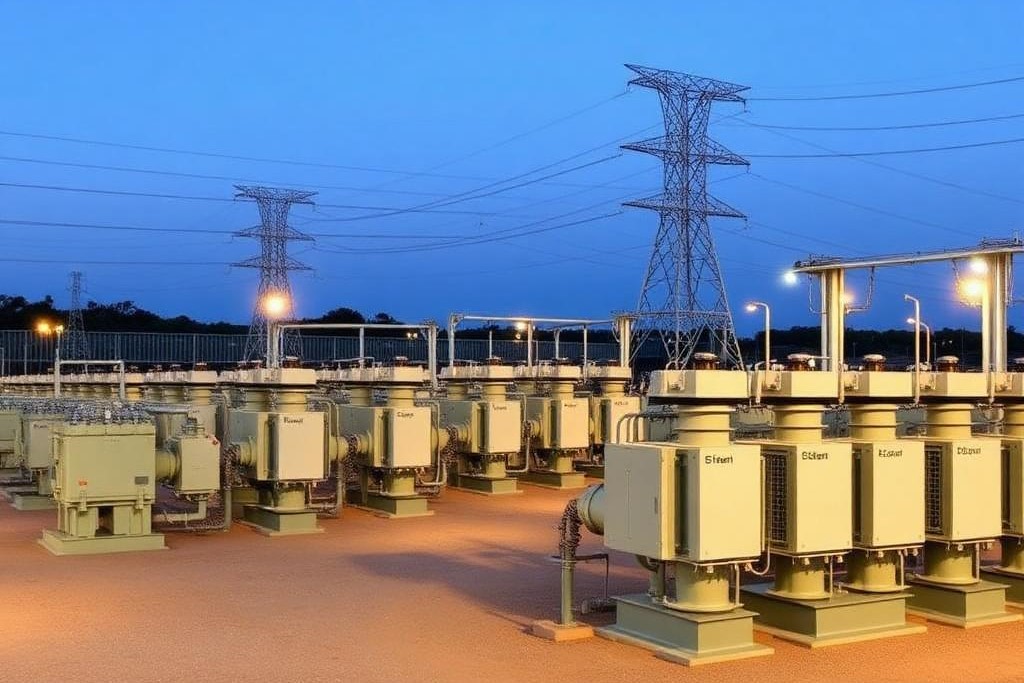
The gleaming new data center, the charging corridor of electric semi-trucks, the sprawling semiconductor fab—they run on electricity. But that electricity doesn’t just appear. It flows through a grid, a complex network of generation, transmission, and distribution assets. The critical nodes in this network, the intersections and interchanges of the electron highway, are substations. And every critical piece of equipment in a substation—from the massive transformers to the towering steel structures that guide the lines in and out—stands on a drilled concrete foundation. As the U.S. rewires itself for a new era of electricity demand, the unglamorous, indispensable work of the commercial drilling contractor has become the critical path.
The Foundation of the Digital and Electric Age
The story of the next American electrical grid is a story about foundations, literally. We are in the early stages of a buildout driven by demand that is both unprecedented in scale and located in new places. Load growth from hyperscale data centers supporting AI is no longer a forecast; it is a present-day reality forcing utilities to redraw their maps. A single one of these campuses can require a gigawatt of power, the output of a large nuclear plant, necessitating entirely new substations and transmission lines where none existed before.
It’s not just data centers. The reshoring of manufacturing, particularly in sectors like semiconductors and batteries, brings immense, concentrated electrical loads. The nationwide push for electric vehicle adoption requires a vast expansion of charging infrastructure, which in turn stresses local distribution networks and requires substation upgrades. At the same time, utilities are undertaking a long-overdue modernization of the existing grid, replacing assets that have been in service for fifty years or more. All of this activity eventually translates into a work order for a drilling crew.
A Look Inside the Fence
Walk onto the site of a new substation under construction, and the scale of the drilling work becomes clear. The largest and most critical foundations are for the power transformers. These units can weigh over 400 tons and require deep, large-diameter drilled shafts, or caissons, to provide stable support and resist vibrational and seismic forces. These aren’t simple post holes; a single transformer foundation might involve drilling a shaft ten feet in diameter and sixty feet deep into the earth.
Surrounding the transformer pads are arrays of smaller foundations for other essential equipment. High-voltage circuit breakers, which act as safety switches for the grid, require robust anchor-bolt cages set with extreme precision into drilled piers. The steel dead-end structures, where overhead transmission lines are terminated and transitioned into the substation bus, need foundations that can withstand the immense tension of the conductors. Even the lattice of galvanized steel buswork and the control house where the relays and computers live all sit on foundations installed by a drilling rig.
The project begins long before the rig arrives, with a geotechnical report that details the soil, rock, and groundwater conditions. From this report, engineers design the foundations, and the drilling contractor plans the means and methods. The process on site involves precise surveying, followed by the rig augering out the shafts. A crane then lowers a prefabricated cage of steel rebar and a precisely positioned anchor bolt template into the hole. Finally, a steady train of concrete trucks fills the shaft, creating a monolithic pillar of reinforced concrete anchored in the earth.
The Art and Science of the Drilled Shaft
Why a drilled shaft? In commercial construction, especially for heavy vertical loads, the choice often comes down to drilled shafts, driven piles, or shallow spread footings. Spread footings are only suitable in excellent soil conditions with no frost heave. Driven piles, while effective, generate significant vibration and noise, which is often unacceptable near existing facilities. They also struggle in ground with boulders or solid rock.
The drilled shaft is the most versatile solution for the variable conditions found on substation and transmission projects. A capable drilling rig, equipped with the right tooling, can handle almost any geology. In soft clays and sands, a dirt auger can excavate the shaft quickly. When the driller encounters groundwater and unstable soil, they can use temporary steel casing or a polymer slurry to keep the hole from collapsing. When the drill hits bedrock, the operator switches from an auger to a core barrel or a down-the-hole hammer to advance the shaft and create a rock socket for maximum load-bearing capacity.
This versatility is where the experience of the crew and the capability of the equipment prove their worth. An experienced operator can feel the change in geology through the rig’s hydraulics and knows when to switch tooling. An unexpected rock ledge that might sideline a less-equipped contractor for days can be addressed in a few hours with the right core barrel. This ability to adapt and solve problems in real-time is what separates a proficient drilling outfit from the rest.
Beyond the Substation: Towers and Transmission
A new substation is rarely an isolated project. It is usually part of a larger transmission upgrade, requiring new or rebuilt lines connecting it to the larger grid. This means more drilled foundations, often in more challenging locations. The foundations for transmission towers present a different set of logistical and technical puzzles.
Lattice towers and the increasingly common steel monopoles each require specific foundation designs, but all involve deep drilling. Unlike a fenced, level substation yard, a transmission right-of-way can cross hills, ravines, and wetlands. Getting a 100-ton piece of equipment like a CZM LR160 hydraulic rotary rig to a remote tower location is a job in itself. It requires careful planning, sometimes building temporary access roads, and using heavy-haul tractors like a Western Star 49X with a lowboy trailer.
Once on site, the work is similar in principle but adapted to the terrain. For a standard monopole foundation, a single large-diameter caisson is typical. For a lattice tower, the crew might drill four smaller-diameter shafts, one for each leg. In mountainous terrain, the design might call for rock-socketed anchors, where the drill secures steel rods deep into the bedrock to hold the tower down against uplift forces from wind and ice. The support equipment, including Cat excavators to manage spoils and JLG telehandlers to lift tooling and rebar cages, is just as critical here as it is in the substation yard.
The Schedule Starts with the Drill Rig
In the complex sequence of a construction project, drilling is often the first critical activity after initial site work. The entire schedule flows from it. Steel cannot be erected until the foundations are poured and cured. Transformers and circuit breakers cannot be set until their pads are ready. As a result, any delay in the drilling scope cascades through the entire project, pushing back the completion date and adding significant cost.
This makes the availability of qualified drilling contractors a primary concern for utilities and EPC firms. The industry is facing a structural shortage of this capacity. The work requires a rare combination of specialized, capital-intensive equipment and highly skilled, experienced crews. You cannot train a proficient large-diameter rig operator in a classroom, and you cannot buy a new rig off the lot. Lead times for new equipment can be a year or more. This combination of factors means that drilling capacity, not just capital, is the true scarce resource in the grid construction ecosystem.
Utilities often cite the availability of specialty subcontractors as a top risk to their capital project schedules. Drilling is frequently at the top of that list. A contractor with a reputation for schedule reliability, who owns and maintains a modern fleet and retains experienced crews, becomes an enabling partner in the broader enterprise of grid expansion.
Anatomy of a Capable Drilling Operation
What does that enabling partner look like? It’s an operating company built on three pillars: people, iron, and process. The people are rig operators with thousands of hours at the controls, foremen who can read a geotech report and anticipate problems, and mechanics who can troubleshoot a complex hydraulic system in the field. It’s a team that has seen every kind of soil and rock and knows how to adapt.
The iron is a modern, well-maintained fleet. A new-generation rig like the CZM LR160 is not just more powerful; it is more reliable, safer, and equipped with telematics that allow for better monitoring and preventative maintenance. Support equipment, from Cat 299D3 track loaders for site cleanup to Ford F-450 work trucks equipped for field service, must be just as reliable. Down-time is the enemy of the schedule.
The process is the system that binds the people and iron together. It is the ability to accurately bid a job, create a realistic work plan, mobilize the right equipment and tooling, manage logistics for a multi-state operation, and execute the work safely and efficiently. It’s the institutional knowledge that allows a driller to look at a set of plans for a complex substation and deliver a predictable outcome.
How We Fit In
The foundational challenge for the commercial drilling industry is expanding its capacity to meet the coming wave of demand. Individual operating companies, even successful ones, can face constraints in securing the capital needed to acquire new, multi-million-dollar rigs and the associated support equipment. This is the problem DrillingCrust Holdings was formed to address.
Our role is straightforward. We invest capital in the industry by acquiring and leasing essential equipment—rigs, excavators, trucks, and trailers—to a portfolio of operating companies. This provides those operators with the modern iron they need to grow their capacity, take on larger projects, and execute them more efficiently. By leasing the equipment, operators can expand their fleets without the upfront balance sheet impact, allowing them to focus their resources on hiring and training the crews who do the work.
This isn’t a financing gimmick; it’s a practical solution to a structural constraint in a vital industry. The grid buildout requires more than just capital; it requires crews and equipment in the field, boring into the earth and pouring concrete. Our business is focused on ensuring that when a utility or a developer is ready to build the next critical piece of American infrastructure, a capable, well-equipped drilling contractor is ready to take the call.
Substations are the connective tissue of the electrical grid. They step voltage up and down, isolate faults, and provide the switching flexibility that keeps power moving. As the U.S. grid rebuilds and expands, substations are one of the largest single categories of capital spend — and every substation sits on drilled foundations.
The scale of the buildout
Utility integrated resource plans across the country describe hundreds of billions of dollars of transmission and substation work over the next decade. Interconnection queues are backed up with generation projects that need substations built or expanded before they can connect. Load growth from data centers is forcing utilities to add substations near hyperscale campuses at unprecedented pace.
What that looks like on site
A single new substation involves anchor bolt cages for transformers and switchgear, drilled piers for structural steel, ground grid work, and often a set of new transmission line takeoffs that themselves need drilled tower foundations. The volume of drilled work per site is substantial, and it is exactly the work commercial drilling contractors are built to do.
The scheduling problem
Utilities routinely cite specialty subcontractor availability as a limiting factor in their construction schedules. Drilling capacity is often the first bottleneck. That is a structural condition, not a passing one, and it is why capacity — not just capital — is the scarce input.
Where DrillingCrust fits
Our focus is straightforward: keep modern iron in the field, keep crews on schedule, and help expand the drilling capacity the grid buildout depends on.
Working in commercial drilling?
Reach out to a DrillingCrust representative to talk projects, partnerships, or the fleet.

A holding company operating across the U.S. commercial drilling industry. We invest capital, provide funding, and lease equipment to established operators building the foundations of modern American infrastructure.
Contact
© 2026 DrillingCrust Holdings LLC. All rights reserved.