Telematics and Utilization: Managing a Fleet the Modern Way
March 13, 2026 · 6 min read · By Thomas Charles
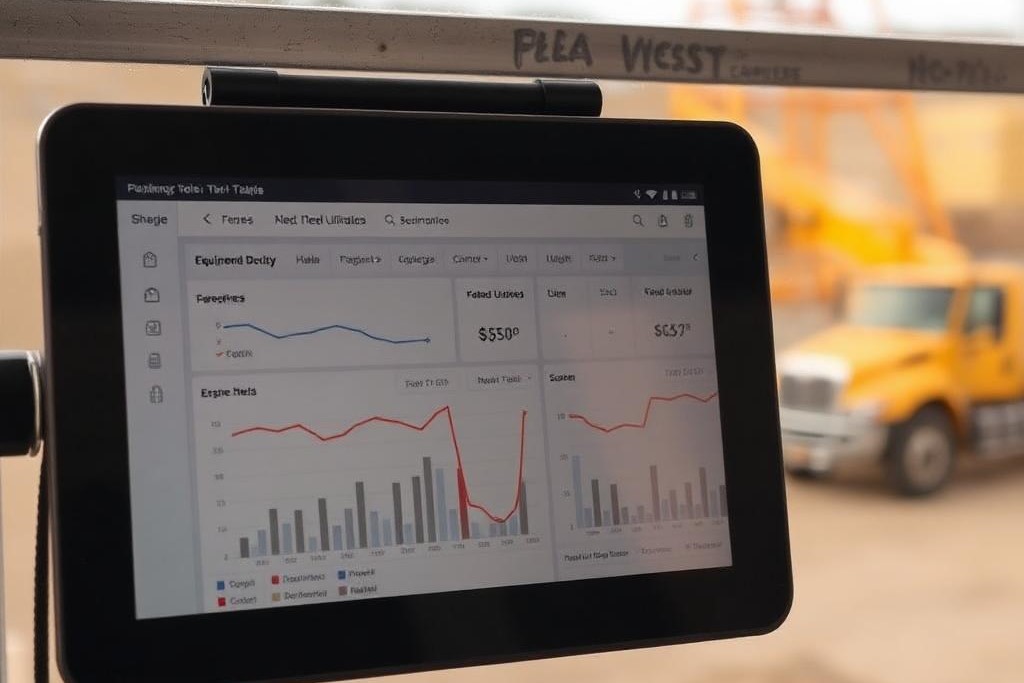
Not long ago, managing a commercial drilling fleet was a gut-feel business supplemented by angry phone calls. To know if a rig was turning on a Tuesday afternoon, you had to call the site superintendent and hope you got a straight answer. Today, for the operators who are serious about their craft, that entire conversation is obsolete. The health, status, and productivity of every major asset are on a screen, updated in real time. We’re talking engine hours, fuel burn rate, precise GPS location, and for the rigs themselves, often granular data like hydraulic pressure, torque, and crowd force. This isn’t about checking a box for a compliance report. The widespread adoption of telematics is creating a clear dividing line in the industry between the crews who use this data to get sharper and the ones who are getting left behind.
This shift is happening against a backdrop of unprecedented demand. The work of rebuilding the U.S. power grid, expanding the Panama Canal, and constructing the massive foundations needed for AI data centers and semiconductor fabs is relentless. The projects are bigger, the schedules are tighter, and the penalties for being late are steeper than ever. In this environment, you don’t make money by guessing. You make it by knowing your numbers, costs, and capabilities cold. Telematics is the source of that truth.
What Gets Measured Gets Managed
The single most important metric that telematics unlocks is utilization. But true utilization isn’t just knowing if the engine is on; it’s knowing if the machine is doing productive work. An engine can idle for eight hours straight, burning fuel and counting toward its next service interval, without a single dollar being earned. The new generation of telematics platforms can distinguish between idling, traveling, and actively working under load. For a drilling rig, that means knowing the difference between the engine running and the kelly bar actually turning with torque in the hole.
This level of detail changes how a fleet is managed. You can look at two identical CZM LR160 rigs on two different job sites and see completely different performance profiles. Rig A might have 9 engine hours with 6.5 hours of active drilling. Rig B might have 9 engine hours with only 3 hours of active drilling. That discrepancy is a glaring signal that demands investigation. Why is Rig B spending so much time idle? Is it a site logistics problem, with trucks of spoil not being cycled efficiently? Is the crew waiting on rebar cages? Or is there a subsurface issue causing the operator to constantly stop and reassess? Without data, this is just a vague feeling that a job is “going slow.” With data, it’s a specific, measurable problem that can be diagnosed and solved.
This same logic applies to the support fleet. A Cat 299D3 XE track loader that spends half its day shuttling back and forth across a sprawling site is a sign of poor site layout. A JLG telehandler that sits in one spot for three days without its boom even extending is an asset that could have been on another project. By tracking true, productive work, a fleet manager can move from reactive problem-solving to proactive optimization.
The EKG of a Drilling Fleet
Beyond high-level utilization, modern telematics acts as a constant stream of health data for every piece of equipment. Think of it as a live EKG for your fleet. Subtle changes in operating parameters are often the earliest warnings of an impending component failure. These aren’t alarm bells that a rookie would notice; they are faint signals buried in the noise that only consistent data tracking can reveal.
A gradual increase in a rig’s average fuel burn, for example, isn’t just a hit to the project’s margin. It signals that the engine is having to work harder. This could be due to something as simple as a clogged air filter or as serious as a failing fuel injector or a compromised hydraulic pump that’s placing an extra load on the engine. Likewise, a hydraulic system that consistently runs 10 degrees hotter than its historical baseline is on a path to failure. The seals are degrading faster, the fluid is breaking down, and a blown hose or cooked pump is no longer a question of if, but when.
Acting on these predictive indicators is what separates top-tier operators from the rest. An emergency field repair on a critical-path machine like a drill rig is a project killer. You have the cost of the mechanic’s travel time, the outrageous expedited shipping for parts, the overtime hours, and worst of all, a crew of six and a half-million dollars worth of support equipment sitting idle for two days while a ten-thousand-dollar part is sourced. Contrast that with addressing the issue based on a data-driven alert. The part is ordered with normal shipping, a mechanic is scheduled to perform the replacement after the next shift, and the rig is back to work the following morning. The first scenario costs a fortune in hard dollars and reputation; the second is just routine maintenance.
Beyond the Drill Rig
A modern commercial drilling operation is far more than just the rig itself. It’s an ecosystem of supporting equipment, and every piece needs to pull its weight. The same telematics principles that apply to the primary rig are just as critical for managing the excavators, loaders, telehandlers, and trucks that make the job possible. The economics of a project can unravel just as easily from poor support fleet management as from a problem with the rig.
Consider the mobilization and demobilization process, a constant source of cost and schedule risk. A Western Star 49X tractor pulling a lowboy with the next rig is a major cost center. With GPS and engine telematics, you can see its exact progress. More importantly, you can see if it’s been sitting for three hours at a weigh station or idling for four hours at the site entrance because the proper laydown area wasn’t prepared. That’s not just wasted fuel; that’s a direct, measurable failure in project coordination that can be corrected for the next move.
The same holds true for smaller, often-overlooked assets. A Cat 308 excavator is essential for managing spoils and setting casings. If its telematics show it’s only active for 15 minutes out of every hour, it’s a sign that its work is poorly sequenced with the rig’s cycle. A Ford F-450 work truck that is consistently logging harsh braking and rapid acceleration events is not only a safety risk but is also incurring higher maintenance and fuel costs. These data points allow managers to have specific, fact-based conversations with crew members about performance and best practices.
A Tool for Honesty and Accountability
Weekly utilization reports, broken down by asset and by project, become a powerful tool for accountability. They cut through excuses and daily report fluff to reveal the ground truth of operational efficiency. When a drilling superintendent knows that fleet management can see the precise productive hours of every machine under his control, conversations about project performance become much more focused. It stops being about opinions and starts being about the data.
This isn’t about creating a punitive environment. It’s about creating an honest one. If one crew consistently gets two more productive hours per shift out of their excavator than any other crew, management can identify what they’re doing differently. Are they better at pre-positioning spoils piles? Have they found a more efficient way to work around the rig? Their techniques can then be documented and trained across the entire company, lifting the performance of all crews.
Conversely, if a project is consistently showing low utilization across all its assets, it points to a systemic issue. It’s likely not a crew problem but a project management failure. Perhaps the site is too congested, materials aren’t being delivered on time, or the geological survey was inaccurate, forcing constant stops. The data directs attention to the real bottleneck, saving time that would otherwise be wasted blaming the wrong people.
From Bidding to Project Sequencing
The long-term value of a deep telematics data set extends far beyond day-to-day operations. It fundamentally improves the ability to bid for new work and sequence projects effectively. In the high-stakes world of deep foundations for data centers or power grid infrastructure, winning bids are built on accurate cost estimation, not guesswork.
Imagine bidding on a project that requires drilling 100 rock sockets into a specific limestone formation. If you have two years of historical telematics data from your CZM rigs, you can query past performance on similar jobs in similar geologies. You know your average penetration rate, your actual fuel consumption per foot drilled, your likely percentage of non-productive time, and your historical maintenance needs on such jobs. Your bid is no longer a loose estimate based on industry averages; it’s a precise calculation based on your own fleet’s proven performance. This is a massive competitive advantage.
This data also transforms how projects are scheduled and sequenced. A fleet manager can see that a certain rig is completing its current job ahead of schedule. At the same time, another project 200 miles away is falling behind. Instead of waiting for both jobs to end, the manager can use this foresight to divert a truck or a support machine from the finishing job to the struggling one, preventing a small delay from cascading into a major one. This level of agility is impossible without a live, accurate view of all assets.
Capital, Confidence, and Partnership
Finally, telematics data provides a foundation of transparency that is critical for the financial side of the equipment business. A company like DrillingCrust Holdings provides capital and leases equipment to skilled operating companies. This business model helps operators expand their fleet and take on larger projects without shouldering the enormous upfront cost of a new rig or a fleet of excavators entirely on their own.
This kind of partnership relies on mutual trust and a clear view of how the assets are being used. When an operating company can provide a clear, verifiable, real-time report of equipment utilization and health, it gives their capital partners confidence. We can see that the equipment is not only working and generating revenue but also being operated and maintained to a professional standard, which protects its long-term value. It’s not about micromanaging the operator—they are the experts in the field—but about replacing subjective assessments with objective data.
This transparency is the lubricant that makes modern equipment financing structures work smoothly. For the operator, it unlocks access to the capital they need to grow. For the capital provider, it provides the verification needed to deploy funds and equipment with a clear understanding of the risks. In the end, a shared, trusted data set aligns the interests of everyone involved, creating a healthier and more sustainable business for the entire industry.
A decade ago, knowing whether a drilling rig was running on a given afternoon meant calling the site superintendent. Today, that answer is on a dashboard — engine hours, fuel burn, GPS location, and often torque and crowd data from the rig itself. Telematics has changed how the best fleets are managed.
Utilization is a leading indicator
Weekly utilization by asset is one of the clearest indicators of operational health. Rigs that consistently underperform their peers get investigated — the answer is often a maintenance issue, a crew scheduling gap, or a project sequencing problem that can be fixed.
Predictive maintenance
Fuel burn spikes, hydraulic temperature drift, and duty-cycle changes are early warnings of impending failures. Acting on them keeps rigs in the field and prevents the emergency repairs that blow up a project schedule.
Using data with partners
Shared telematics also improves relationships with capital partners. Transparent utilization reporting is what makes structured equipment financing — leases, sale-leasebacks, and asset-backed structures — work smoothly for everyone involved.
Working in commercial drilling?
Reach out to a DrillingCrust representative to talk projects, partnerships, or the fleet.

A holding company operating across the U.S. commercial drilling industry. We invest capital, provide funding, and lease equipment to established operators building the foundations of modern American infrastructure.
Contact
© 2026 DrillingCrust Holdings LLC. All rights reserved.