
Winter Drilling and Weather Planning: Keeping Production Steady
March 27, 2026 · 6 min read · By Thomas Charles
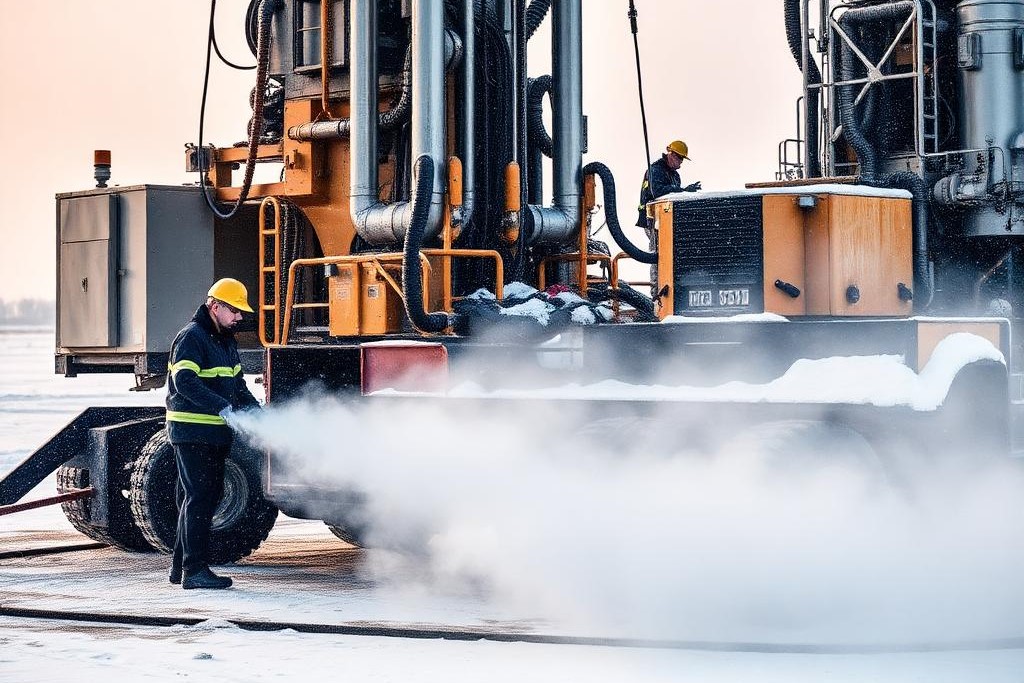
Weather is the one variable on a commercial drilling project that makes liars out of the best project managers. A project plan is a work of fiction until the first shovel is in the ground, and that fiction gets truly tested when the first arctic front blows through. Rain turns a well-prepped drill pad into a soupy mess, high winds sideline crane picks for rebar cages, and a sudden freeze can turn a multi-day concrete pour into a high-stakes science experiment. Yet the clock never stops ticking. The demand for new power grid infrastructure, data centers, and advanced manufacturing facilities doesn’t pause for winter. The general contractors and end-users driving these projects have schedules dictated by shareholder expectations and market demand, not the Farmer’s Almanac. This is the unforgiving reality of our business. The operators who thrive in this environment are not the ones who get lucky with the weather; they are the ones who plan so meticulously that luck becomes a smaller and smaller part of the equation.
The Honest Limiting Factor
Every project schedule has contingency days built in. The problem is, these are often treated as a buffer for any and all problems, from supply chain hiccups to design changes. A rookie mistake is to assume these days are purely ‘weather days.’ A seasoned operator knows that Mother Nature can consume that entire buffer in a single week of freezing rain or a blizzard. The real measure of a drilling contractor isn’t their ability to work through a storm—drilling a 10-foot diameter shaft in a 30-mile-per-hour crosswind with blowing snow is unsafe and impractical. The real measure is how they manage the entire project ecosystem around the weather.
This means front-loading communication with the general contractor and other trades. What is the plan for snow removal from the site, and who is responsible? Are the access roads properly graded and rocked to handle a fleet of 80,000-pound concrete trucks after a downpour, or will they turn to impassable mud? On a tight urban site, where will crews park if the designated lot is an unplowed field? These aren’t drilling problems on the surface, but they become drilling problems when our CZM LR160 rig sits idle because the crew can’t get to it or the concrete trucks can’t reach the borehole. The best contractors force these conversations early, turning assumptions into a clear, actionable plan.
Concrete Doesn’t Like The Cold
Placing concrete in temperatures below 40 degrees Fahrenheit, and especially below freezing, is one of the most critical challenges in winter drilling. A drilled shaft foundation is only as good as the concrete that forms it, and cold weather is its enemy. When water in the concrete mix freezes, it expands, destroying the material
's structural integrity from the inside out. This isn't something you can patch later; it's a catastrophic failure that requires a complete, and costly, tear-out and replacement.
The first line of defense is the mix design itself. We work closely with the ready-mix supplier to introduce chemical admixtures. Non-chloride accelerators, as the name implies, speed up the hydration process, causing the concrete to generate its own internal heat faster and achieve its initial set before it can freeze. Water-reducing admixtures allow for a lower water-to-cement ratio, which means there is less excess water in the mix available to freeze. These adjustments are not a 'one size fits all' solution; they have to be tailored to the specific temperature forecast and the mass of the pour.
From there, it becomes a battle of retaining heat. The ready-mix plant will heat the aggregate and the water used in the mix, so the concrete arrives on site already warm, typically between 65 and 75 degrees. Once the tremie pour is complete, the top of the drilled shaft is immediately covered with thick, insulated blankets. For extremely cold conditions or on high-specification jobs, like for a turbine foundation, we might build a fully enclosed, heated tent around the placement area. This is a significant logistical undertaking that involves the GC, but it is non-negotiable when the structural integrity of a billion-dollar facility rests on the foundation we’re building.
Keeping The Iron Running
Diesel engines, hydraulic systems, and electrical components form the heart of our equipment fleet, and all of them protest in the cold. A Cat 308 excavator or a 299D3 track loader that starts effortlessly in July can become a stubborn beast on a five-degree morning. The primary challenge is simple physics: fluids get thicker. Cold hydraulic oil is sluggish and puts immense strain on pumps, leading to slow, jerky operation and potential damage. Engine oil viscosity increases, making it harder for the starter motor to turn the engine over.
Experienced crews have a pre-dawn ritual in the winter. It starts with ensuring engine block heaters were plugged in overnight. These small heating elements keep the engine block and the fluids within it at a manageable temperature. For our larger rigs, like the LR160, this is a standard operating procedure below 40 degrees. Next is managing the Diesel Exhaust Fluid (DEF), which will crystallize and freeze around 12 degrees Fahrenheit. While our modern trucks and machinery have heated DEF tanks and lines, a failure in that system can derate the engine or shut it down completely. Crews must know how to diagnose these systems and not just assume a code is a glitch.
Batteries are another weak point. A battery's ability to produce cranking amps can be cut in half at zero degrees. We invest in high-quality, heavy-duty batteries and test them proactively before the winter season begins. For equipment left on remote sites, like a substation rebuild deep in a right-of-way, crews might even pull the batteries overnight and keep them in a heated truck or trailer. It’s a small hassle that prevents a lost morning trying to get a jump from a Ford F-450 to a machine with batteries four times the size. It all comes down to respecting the iron and understanding that it needs to be managed differently when the temperature drops.
The Art of the Winter Schedule
The most productive operators view the weather forecast not as a prediction, but as a strategic planning tool. You don’t just watch the forecast for the next 24 hours; you look at the 10-day trend. If an arctic blast is predicted for next Thursday and Friday, a savvy superintendent doesn’t just plan to send everyone home. Instead, they re-sequence the work. Those become the perfect days to move operations inside the fabrication tent to weld rebar cages, perform scheduled maintenance on tooling, or catch up on paperwork and safety training.
This proactive scheduling turns potential downtime into productive time. The crew is still billing hours, but they’re getting ahead on tasks that would otherwise have to be done during prime drilling weather. When a sunny, 40-degree window opens up, you want to be drilling. You don't want to waste that precious opportunity doing things that could have been done in the freezing cold. This means having rebar cages already tied and staged, tooling inspected and ready, and a clear plan for the sequence of drilling.
It also means building a realistic schedule from the outset. We factor in a certain number of 'unworkable' days per month based on historical weather data for that specific region. This isn't just a slush fund for delays; it’s a data-driven approach that sets realistic expectations with the GC. When we inevitably lose two days to an ice storm, it’s not a panic-inducing crisis; it's a planned eventuality. This level of foresight is what separates a contractor who is always fighting fires from one who is consistently in control of the project tempo, delivering on time and on budget.
The Ground Itself Fights Back
Beyond the machinery and materials, the earth itself behaves differently in winter. The most obvious challenge is frost. Depending on the soil type and moisture content, the top several feet of ground can freeze solid, turning what would be an easy excavation with a Cat 308 into a grueling battle. We may need to bring in larger excavators with hydraulic hammers or specialized frost-ripping teeth just to break through the top layer to begin drilling. This requires planning and having the right tooling available; it’s not something you can just rent on a moment’s notice.
Water is the other major issue. A site that has good drainage in the summer can become a swamp in the winter. The freeze-thaw cycle can turn stable ground into mud. This has a direct impact on our heavy equipment. A fully loaded Western Star 49X pulling a lowboy with our LR160 rig needs a firm, stable path. Getting that truck stuck is not just an inconvenience; it’s a major recovery operation that can shut down a project for a day. That’s why we scrutinize the site logistics plan, insisting on adequate gravel on access roads and well-maintained-drill pads. It’s cheaper to lay down a few extra loads of stone than it is to hire a heavy wrecker to pull a semi out of the mud.
Ultimately, winter drilling is a test of a company’s systems, from its people to its processes to its machinery. It magnifies weaknesses and rewards preparation. The immense capital projects reshaping the American landscape won’t wait for warm weather. The contractors who understand how to plan for, and execute in, the harshest conditions are the ones who will build that future.
Weather is the honest limiting factor in commercial drilling. Rain turns pads to mud, wind halts crane picks, and freezing temperatures complicate concrete work. Yet the projects driving today's demand — transmission, substations, data centers — do not slow down for winter. Operators who plan around the weather stay productive when others stop.
Cold-weather concreting
Concrete placement in freezing conditions requires additives, heated aggregates, insulated blankets, and sometimes fully enclosed placement environments. Coordinating these details with a ready-mix supplier and the general contractor is part of the drilling contractor's scope on most winter jobs.
Keeping iron running
Hydraulic systems, batteries, and diesel engines all behave differently in the cold. Crews with winter experience know how to pre-heat rigs, manage fluid viscosities, and prevent the small delays that stack up into lost days.
Scheduling around the weather
The most productive operators build weather contingency into their schedules from the start — sequencing indoor prep work, cage fabrication, and equipment maintenance for the worst weeks, and pushing production drilling into the windows when conditions cooperate.
Working in commercial drilling?
Reach out to a DrillingCrust representative to talk projects, partnerships, or the fleet.

A holding company operating across the U.S. commercial drilling industry. We invest capital, provide funding, and lease equipment to established operators building the foundations of modern American infrastructure.
Contact
© 2026 DrillingCrust Holdings LLC. All rights reserved.